
Best Commercial Pizza Ovens for Restaurants: Top Features to Consider
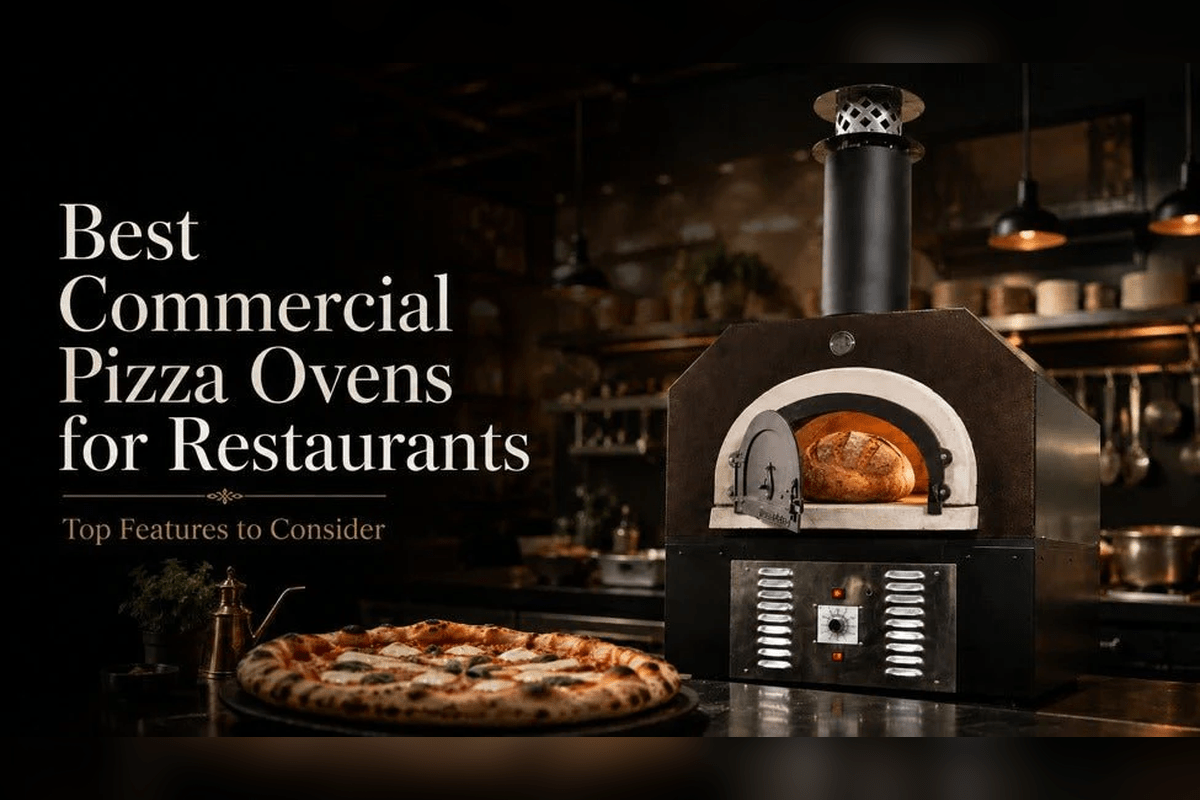
The best commercial pizza oven for a restaurant is the one that fits its menu, peak service demand, kitchen layout and installation requirements. Start with the work the oven needs to do, then compare cooking capacity, fuel, heat management, certification and support. A maximum-temperature claim alone will not tell you whether an oven fits your operation.
Compare commercial oven types
The wider market includes several approaches. These are equipment categories to compare—not a list of products offered by Chicago Brick Oven.
- Deck ovens: pizzas bake on a heated deck, with loading and handling managed by the operator. Compare deck area and the number of chambers with your menu.
- Conveyor ovens: food travels through a cooking chamber on a belt. Evaluate belt width, available cooking time and workflow for your recipes.
- Brick and refractory ovens: a heated hearth and cooking chamber support hands-on baking. Wood-fired cooking can also provide a visible live-fire experience.
- Convection ovens: circulating heated air provides another cooking approach. Confirm that the particular model suits the pizza quality and production volume you need.
CBO focuses on wood-fired and Hybrid dual-fuel pizza ovens. Compare those options in the commercial pizza oven collection.
1. Size the oven for peak service, not average demand
Estimate the pizzas required during your busiest period, their diameter and the other dishes sharing the oven. Allow for food handling, fire placement and recovery between batches. Staffing, preparation space and the speed of topping and serving pizzas can be just as important as hearth area.
- What is your busiest service window?
- Will you cook pizza alongside vegetables, meat or bread?
- How much seasonal or event-driven variation do you expect?
- Will pans and tools fit through the oven opening?
Use the commercial pizza oven size guide to frame the discussion, then confirm exact specifications for the model you select. Do not treat a theoretical bake time as guaranteed pizzas-per-hour output.
2. Compare heat retention and recovery
A restaurant needs a cooking surface and chamber that support its intended baking style through repeated loading. Refractory construction, insulation, fuel management and how the oven is operated all matter. Consider recovery between batches as well as initial heating.
CBO's low-dome design brings the flame and heated refractory chamber into the cooking process. Your dough, toppings and pizza style still determine the appropriate cooking approach. Our pizza oven temperature guide provides further context; follow the model manual for operating limits and procedures.
3. Choose a fuel system your team can operate
Wood-fired cooking involves fuel storage, building and tending the fire, and ash management. A Commercial Hybrid adds gas capability while retaining wood-fired cooking. It can offer flexibility across service periods, but it still requires correct installation, operation and maintenance.
CBO's Hybrid is a dual-fuel oven, not a separate gas-only product category. Select the correct commercial configuration and fuel supply for the project. Read the commercial wood-fired versus gas comparison for questions to discuss with your team.
4. Confirm certification and installation before ordering
Review the exact model's listing, current manual and intended application with your installer and the local authority responsible for approval. A certification is not blanket approval for every kitchen, trailer or building. Required clearances, structural support, gas connections, chimney or exhaust arrangements and other installation conditions must all be satisfied.
Do not substitute a residential Hybrid configuration for the Commercial Hybrid specified for a commercial project. Use CBO's manuals and resources together with the commercial installation planning guide. The applicable manual and project requirements take priority over general buying advice.
5. Check kitchen footprint and delivery access
Measure the oven's destination and the route used to get it there. Include doorways, lifting or handling requirements, support capacity, service access and the working area for loading food. Review the ventilation design early, rather than treating it as an addition after the kitchen is built.
For layout planning, compare indoor and outdoor commercial installations and outdoor commercial oven uses.
6. Match the oven to the business model
Pizzerias and restaurants
Start with your pizza style, rush-period volume and the experience you want guests to see. Compare hands-on live-fire cooking with other production approaches rather than assuming one oven type is best for every restaurant.
Hotels and hospitality kitchens
Consider how the oven will serve different meal periods and menus. Pizza, roasting dishes, vegetables and bread may need different temperatures and timing; build that scheduling into the workflow rather than expecting every dish to cook together.
Catering and events
Include transport, venue access, fuel availability and event-specific requirements. A wheeled stand and a road trailer serve different purposes: the CBO-750 Mobile is not the same transport solution as the Tailgater oven-and-trailer package. Explore mobile and trailer oven options and confirm suitability for the intended venue and use.
7. Budget for ownership, service and support
Compare the full installed cost, not just the equipment price. Include utilities, ventilation or chimney work, handling, accessories, fuel, staff training and routine care. Ask about replacement parts, service access and the applicable warranty. Confirm current availability and lead times with CBO rather than relying on general assumptions about domestic or imported equipment.
Commercial pizza oven buying checklist
- Menu, pizza size and peak demand defined.
- Hearth capacity and handling workflow reviewed.
- Fuel configuration and supply confirmed.
- Exact model certification and installation requirements checked.
- Delivery route, support and clearances measured.
- Cleaning, maintenance and staff responsibilities planned.
- Total project budget and support arrangements understood.
Bring these details to the CBO team when comparing commercial pizza ovens. The goal is a model that suits your kitchen and service—not simply the largest oven or highest advertised temperature.
Leave a comment