
Indoor vs Outdoor Commercial Pizza Oven: Which Should You Choose?
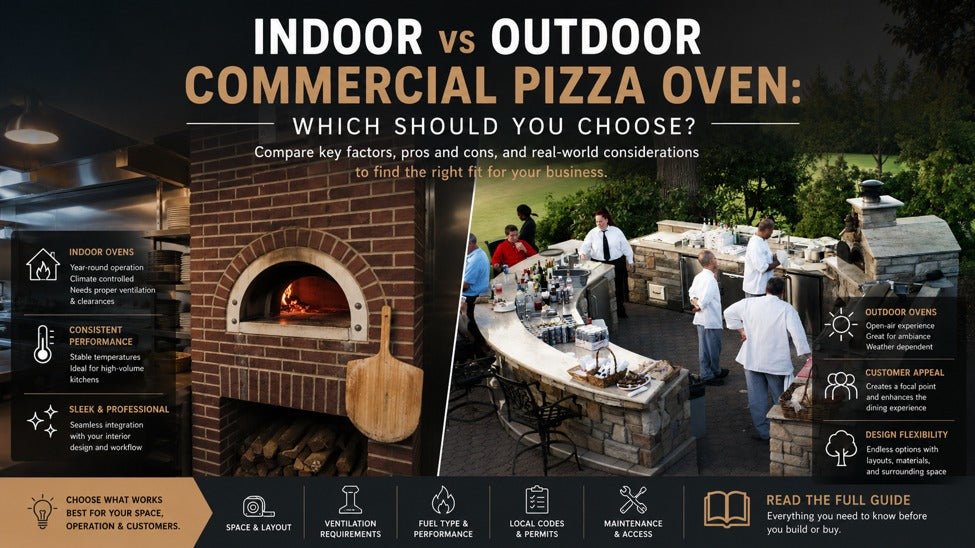
Choosing between an indoor commercial pizza oven and an outdoor pizza oven for restaurant operations is one of the most important decisions for restaurant owners, pizzeria operators, resorts, and hospitality businesses. The right choice affects everything from workflow efficiency and customer experience to installation costs and menu flexibility.
While indoor ovens remain the standard for many commercial kitchens, outdoor wood-fired ovens have become increasingly popular for restaurants looking to create memorable dining experiences and authentic artisan flavors.
The best option depends on your business model, available space, climate, cooking style, and long-term goals.
Quick Answer
Indoor commercial pizza ovens are ideal for high-volume restaurant kitchens that require year-round consistency, controlled working conditions, and streamlined operations. Outdoor commercial pizza ovens excel in restaurants with patio dining, resorts, event venues, and hospitality spaces where visible fire, authentic wood-fired flavor, and guest engagement are part of the experience.
At Chicago Brick Oven, we've seen successful commercial operations use both approaches depending on their unique requirements.
Understanding Indoor Commercial Pizza Ovens
An indoor commercial pizza oven is installed inside a restaurant kitchen and operates within a controlled environment. These ovens are commonly powered by gas or electricity and are designed to integrate seamlessly into commercial kitchen workflows.
Advantages of Indoor Commercial Pizza Ovens
Consistent Performance Throughout the Year
Because indoor ovens are protected from weather conditions, they provide reliable cooking performance regardless of rain, snow, wind, or temperature fluctuations.
This consistency is particularly valuable for restaurants operating in regions with harsh winters or unpredictable weather patterns.
Efficient Kitchen Workflow
Indoor ovens allow kitchen staff to prepare, cook, and serve pizzas without moving between separate cooking areas. This can improve productivity during peak service hours.
Controlled Environment
Temperature, humidity, and airflow remain stable indoors, helping operators maintain consistent cooking results across every shift.
Challenges of Indoor Installations
Indoor pizza ovens typically require:
- Commercial ventilation systems
- Exhaust hoods and ductwork
- Fire code compliance
- Additional installation planning
- Ongoing ventilation maintenance
These requirements can increase upfront installation costs and project timelines.
Understanding Outdoor Commercial Pizza Ovens
An outdoor pizza oven for restaurant settings is installed on patios, terraces, outdoor kitchens, event spaces, or hospitality venues.
Unlike conventional indoor systems, outdoor ovens often become a centerpiece of the dining experience.
Advantages of Outdoor Commercial Pizza Ovens
Authentic Wood-Fired Flavor
One of the biggest reasons operators choose outdoor ovens is flavor.
Cooking with hardwoods such as oak, maple, or fruitwood creates a distinctive taste profile that many customers associate with authentic artisan pizza.
At Chicago Brick Oven, our commercial wood-fired ovens use proprietary FlameRoll™ technology to maximize heat circulation and create the intense cooking environment needed for authentic Neapolitan-style pizza.
The result is exceptional crust development, balanced toppings, and pizzas cooked in approximately 90 seconds at temperatures approaching 1,000°F.
Enhanced Guest Experience
Modern diners increasingly value experiences as much as food.
A visible flame, handcrafted pizza preparation, and live-fire cooking create a natural focal point that encourages social engagement and strengthens a restaurant's brand identity.
For resorts, wineries, breweries, and outdoor dining venues, a wood-fired oven often becomes one of the most photographed features of the property.
Reduced Indoor Ventilation Requirements
Depending on local regulations and installation design, outdoor ovens may eliminate some of the expensive ventilation requirements associated with indoor commercial kitchens.
Challenges of Outdoor Installations
Outdoor ovens must be designed to withstand:
- Rain and snow
- High winds
- Temperature fluctuations
- Freeze-thaw cycles
- Humidity and moisture exposure
This is where engineering becomes critical.
Many imported ovens are designed for milder climates and may struggle under demanding North American weather conditions.
Chicago Brick Oven commercial models are built using proprietary refractory cement reinforced with stainless steel fibers, making them capable of handling extreme climate conditions while maintaining long-term performance.
Commercial Pizza Oven Placement: Key Factors to Consider
When evaluating commercial pizza oven placement, restaurant owners should consider several operational and regulatory factors.
Available Space
Indoor kitchens often have limited square footage, especially in urban locations.
Outdoor installations can free up valuable kitchen space while creating an additional cooking station.
Customer Experience Goals
If your concept focuses on speed, delivery, and kitchen efficiency, indoor placement may be the better fit.
If your brand emphasizes artisan cooking, entertainment, and visible craftsmanship, an outdoor installation may provide a stronger competitive advantage.
Local Regulations
Before selecting an oven location, review:
- Fire codes
- Health department regulations
- Ventilation requirements
- Open-flame restrictions
- Commercial building permits
Compliance requirements vary significantly by location.
Climate Conditions
Weather should always be part of the decision-making process.
Restaurants in colder climates need ovens specifically engineered for freeze-thaw durability and long-term outdoor exposure.
Which Is the Best Pizza Oven for Restaurant Kitchen Operations?
There is no single best pizza oven for restaurant kitchen environments because every operation has different needs.
However, several questions can help guide your decision:
Choose an indoor oven if:
- You prioritize year-round consistency
- Your operation focuses on high-volume production
- Indoor kitchen workflow is essential
- Outdoor space is limited
Choose an outdoor oven if:
- Guest experience is a major priority
- You want authentic wood-fired flavor
- Your restaurant includes patio or outdoor dining
- Visual presentation supports your brand strategy
Many hospitality businesses now combine both approaches by integrating indoor preparation areas with outdoor wood-fired cooking stations.
Features That Matter Most in Commercial Pizza Ovens
When comparing commercial oven options, it is important to look beyond installation location.
Factors such as heat retention, cooking speed, certifications, durability, fuel flexibility, and long-term performance often have a greater impact on operational success.
If you're evaluating equipment options, our guide on Best Commercial Pizza Ovens for Restaurants: Top Features to Consider explores the most important performance characteristics, including oven construction, temperature capabilities, fuel choices, and certification standards that restaurant owners should prioritize before making an investment.
Final Thoughts
The decision between an indoor commercial pizza oven and an outdoor commercial pizza oven ultimately comes down to your operational goals, customer experience strategy, and facility requirements.
Indoor systems provide consistency, workflow efficiency, and year-round reliability. Outdoor wood-fired ovens deliver authentic flavor, memorable guest experiences, and visual appeal that can set a restaurant apart from competitors.
For operators seeking professional-grade performance, Chicago Brick Oven combines authentic Neapolitan-inspired design, patented FlameRoll™ technology, UL and NSF4 certifications, and American-made engineering to deliver commercial cooking solutions built for demanding real-world environments.
Whether installed indoors or outdoors, the right commercial pizza oven should do more than cook pizza—it should elevate the entire dining experience.
Leave a comment