
Wood Fired Pizza Oven Temperature: The Best Heat for Perfect Pizza
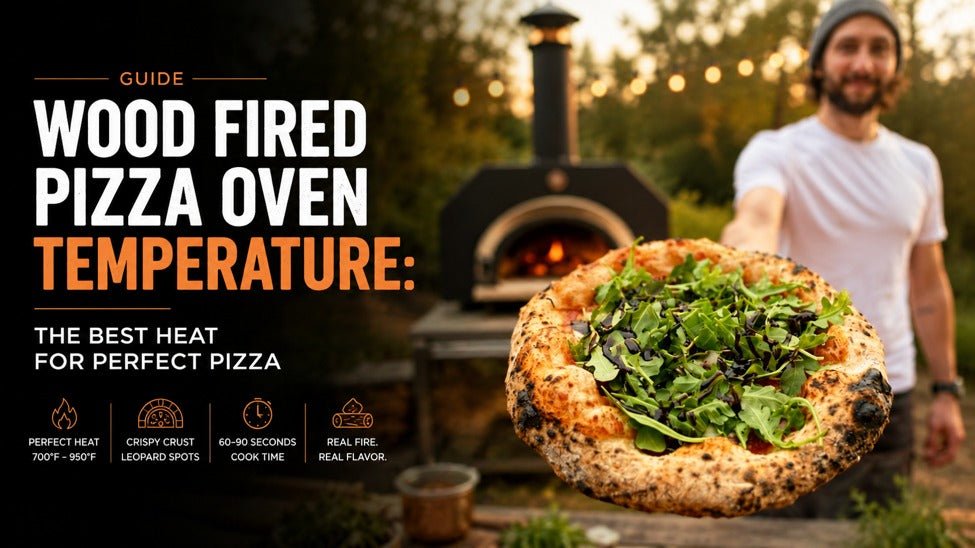
If you've ever wondered why authentic wood-fired pizza tastes dramatically different from pizza baked in a conventional oven, the answer often comes down to one critical factor: temperature.
The right pizza cooking temperature transforms simple dough, sauce, and cheese into a perfectly balanced pizza with a crisp yet airy crust, beautifully melted toppings, and the signature leopard-spotted char that defines true Neapolitan-style pizza.
At Chicago Brick Oven, we believe understanding oven temperature is just as important as choosing quality ingredients. Our American-made wood-fired brick ovens are engineered to reach and maintain the high temperatures needed for professional-level results, whether you're cooking in your backyard or operating a commercial kitchen.
What Is the Best Temperature for a Wood-Fired Pizza Oven?
The ideal wood-fired pizza oven temperature ranges between 750°F and 900°F (400°C to 482°C).
This temperature range creates the conditions necessary for authentic pizza baking. At these temperatures:
- The crust rises rapidly and develops an airy interior.
- Moisture evaporates quickly, preventing soggy pizza.
- Cheese melts evenly without overcooking.
- The crust develops the signature charred spots associated with traditional Neapolitan pizza.
Many pizza enthusiasts search for a reliable pizza oven temperature guide because even small temperature differences can dramatically affect the final result. While lower temperatures can still produce good pizza, authentic wood-fired pizza achieves its unique texture and flavor when cooked in this high-heat range.
Why High Heat Matters for Perfect Pizza
The secret behind great wood-fired pizza is not simply heat—it's the combination of intense heat and the way that heat is distributed throughout the oven.
Traditional wood-fired ovens cook using three different forms of heat simultaneously:
1. Conduction Heat
The pizza sits directly on the hot cooking floor. The heat transfers from the stone into the dough, creating a crisp and evenly cooked base.
2. Radiant Heat
The heated dome reflects energy back onto the pizza, cooking toppings from above while helping create the characteristic blistered crust.
3. Convection Heat
Hot air circulates throughout the oven chamber, surrounding the pizza with consistent heat and promoting even cooking.
This combination of conduction, radiation, and convection is what creates the famous crispy-chewy texture that cannot easily be replicated in standard kitchen ovens.
The Importance of Stone Temperature
Many people focus solely on air temperature, but the cooking floor temperature is equally important.
For optimal results, the oven floor should be approximately 750°F (400°C) before launching a pizza. A digital infrared thermometer is the most reliable way to verify the temperature of the cooking surface.
When the stone reaches the proper temperature:
- The crust cooks quickly.
- The dough develops proper structure.
- The bottom remains crisp without burning.
- Moisture is removed efficiently.
Without sufficient stone temperature, even a hot oven may produce undercooked or soggy pizza.
How Long Does Pizza Take to Cook?
At the ideal pizza cooking temperature of 750°F to 900°F, pizza typically cooks in just 60 to 90 seconds.
This rapid cooking process preserves the freshness of ingredients while creating the perfect balance between crispness and softness.
To achieve an even bake:
- Rotate the pizza every 20 to 30 seconds.
- Monitor areas closest to the flame.
- Use a turning peel to maintain consistent exposure to heat.
The short cooking time is one of the defining characteristics of authentic wood-fired pizza.
How Chicago Brick Oven Achieves Consistent High Temperatures
Not all wood-fired ovens are designed to maintain extreme temperatures consistently.
Chicago Brick Oven combines ancient Italian oven principles with modern American engineering to create ovens capable of reaching temperatures up to 1,000°F.
Proprietary FlameRoll™ Technology
One of the defining features of Chicago Brick Oven is our proprietary FlameRoll™ Technology.
This innovative system creates a vacuum effect that pulls flames and heat across the oven dome. The result is:
- Superior heat circulation
- Faster preheating
- More even cooking
- Consistent temperature distribution
By combining radiant, convection, and conduction cooking, FlameRoll™ helps create the ideal environment for authentic pizza baking.
Can a 1000 Degree Pizza Oven Improve Results?
A 1000 degree pizza oven offers exceptional versatility beyond pizza.
While most pizzas cook best between 750°F and 900°F, the ability to reach higher temperatures provides advantages such as:
- Faster recovery between pizzas
- Enhanced heat retention
- Greater flexibility for different cooking styles
- Professional-level performance
Chicago Brick Oven models are engineered to safely reach temperatures approaching 1,000°F while maintaining structural integrity through proprietary refractory cement reinforced with stainless steel fibers.
This durability is particularly important in North American climates where ovens must withstand freeze-thaw cycles, humidity, and seasonal weather changes.
How Hot Does a Commercial Pizza Oven Get?
A common question among restaurant owners is: How hot does a commercial pizza oven get?
Commercial wood-fired pizza ovens typically operate between 700°F and 1,000°F, depending on the pizza style being produced.
For authentic Neapolitan pizza, operators generally target temperatures between 800°F and 900°F.
For restaurants evaluating equipment options, temperature capability should be only one consideration. Heat retention, certification, durability, airflow management, and recovery time are equally important. These factors are discussed in greater detail in our guide on Best Commercial Pizza Ovens for Restaurants: Top Features to Consider, which explores what separates professional-grade ovens from standard alternatives.
How to Manage Temperature in a Wood-Fired Oven
Maintaining the proper temperature requires more than simply adding wood.
For best results:
- Fully preheat the oven before cooking.
- Allow the cooking floor to absorb heat thoroughly.
- Push burning logs and embers to the side or rear of the oven.
- Keep flames rolling across the dome.
- Use the oven door and ventilation system to regulate airflow.
- Monitor floor temperature regularly with an infrared thermometer.
Proper fire management ensures consistent cooking conditions throughout your baking session.
Why Oven Design Matters
The shape and construction of a wood-fired oven directly affect temperature performance.
Chicago Brick Oven's low-dome, igloo-shaped design is inspired by traditional Neapolitan ovens. This design promotes:
- Faster heat-up times
- Better heat retention
- Improved flame movement
- More efficient airflow
Combined with FlameRoll™ Technology and our proprietary refractory materials, the design allows the oven to maintain ideal cooking temperatures for extended periods.
Final Thoughts
The best wood-fired pizza is created when heat, airflow, and oven design work together. While the ideal pizza oven temperature guide recommends cooking between 750°F and 900°F, achieving consistent results requires more than reaching a specific number.
Authentic pizza depends on proper stone temperature, balanced heat transfer, and reliable oven engineering.
Chicago Brick Oven was founded to solve the challenges associated with imported ovens by delivering American-made performance, certified safety, and exceptional durability. Our ovens combine traditional Neapolitan design with advanced engineering to help homeowners, chefs, and restaurants achieve authentic wood-fired cooking at temperatures reaching up to 1,000°F.
Because when heat is managed correctly, every pizza becomes an experience and as we like to say, everything tastes better woodfired.
Leave a comment