
Commercial Pizza Oven Size Guide: What Size Oven Do You Need?
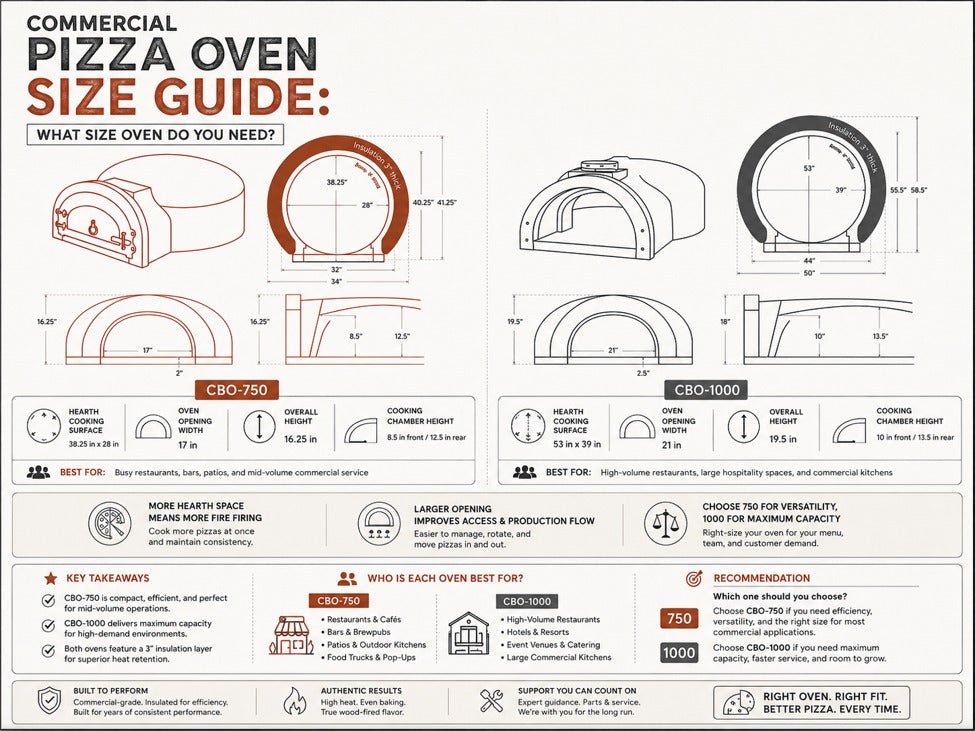
Choosing the right commercial pizza oven size is one of the most important decisions for any restaurant, pizzeria, brewery, hospitality venue, or outdoor dining concept. The wrong oven can create production bottlenecks, slow service, limit menu growth, and impact customer satisfaction. The right oven, however, supports efficient workflows, consistent cooking results, and future business expansion.
If you're wondering what size pizza oven for restaurant operations makes the most sense, the answer depends on several factors including your expected hourly output, pizza sizes, kitchen layout, and long-term business goals.
At Chicago Brick Oven, we help commercial operators select ovens that deliver professional performance, authentic wood-fired flavor, and the production capacity needed to keep up with demand.
Start with Your Required Pizza Output
Before comparing models, determine how many pizzas you expect to serve during peak operating hours.
A small café, brewery, or food truck may only need to produce 10 to 30 pizzas per hour. In these cases, compact countertop or smaller commercial ovens may provide enough capacity.
A busy pizzeria or restaurant serving lunch and dinner crowds typically requires higher throughput. High-demand operations often need ovens capable of producing 50, 75, or even 100+ pizzas per hour during peak periods.
Understanding your target production volume is the first step in choosing the correct pizza oven capacity.
Rather than selecting an oven based solely on today's demand, it is wise to account for future growth. An oven that supports expansion can help avoid costly upgrades later.
Understanding Commercial Pizza Oven Dimensions
Commercial pizza ovens come in various configurations, and each design impacts both production volume and kitchen space requirements.
Countertop and Conveyor Ovens
These compact systems are commonly used in food trucks, convenience stores, concession stands, and lower-volume food service operations.
Typical capabilities include:
- 10–30 pizzas per hour
- Smaller footprints
- Simplified operation
- Consistent baking cycles
While they can be effective for specific applications, they generally lack the cooking theater, artisan quality, and high-temperature performance associated with authentic brick ovens.
Deck Ovens
Deck ovens remain a popular choice for traditional pizzerias and artisan pizza concepts.
Depending on the model and deck configuration, operators can typically bake:
- 4–12 pizzas simultaneously
- Multiple pizza styles
- Larger pizza sizes
Deck ovens offer excellent flexibility but often require skilled staff to manage temperatures, rotations, and bake timing.
Commercial Wood-Fired Brick Ovens
For restaurants seeking authentic flavor and a memorable guest experience, commercial wood-fired ovens provide a unique advantage.
Large commercial brick ovens with internal diameters ranging from 40 to 60+ inches can often accommodate 6–10 pizzas at once while delivering the visible flame presentation that customers love.
Chicago Brick Oven commercial models combine traditional Neapolitan-inspired design with modern American engineering to maximize performance and durability.
Match the Oven to Your Pizza Size
One of the most overlooked factors when evaluating commercial pizza oven dimensions is the size of the pizzas you plan to serve.
The larger the pizza, the larger the cooking chamber required.
Up to 12-Inch Pizzas
Restaurants focused on personal pizzas, appetizers, or quick-service menus may find compact ovens sufficient.
Smaller chambers generally provide enough room for efficient baking while minimizing floor space requirements.
14-Inch to 16-Inch Pizzas
These are among the most common sizes in full-service restaurants and pizzerias.
To comfortably manage production, operators typically need medium-to-large cooking chambers with sufficient depth and width for turning pizzas and maintaining proper airflow.
18-Inch to 20-Inch Pizzas
Large-format pizzas require significantly more cooking space.
Commercial operators serving oversized pies should ensure their selected oven provides enough internal dimensions for maneuverability, multiple pizza placement, and consistent heat distribution.
Using the largest pizza size on your menu as the planning baseline helps prevent production slowdowns during busy service periods.
Why Internal Capacity Matters More Than Exterior Size
Many buyers focus exclusively on an oven's external footprint. While kitchen space is important, internal cooking capacity has a much greater impact on long-term performance.
An efficiently designed commercial brick oven can deliver exceptional throughput without requiring excessive floor space.
Chicago Brick Oven's commercial systems utilize a low-dome, igloo-shaped design inspired by traditional Italian ovens. This engineering approach improves heat retention, airflow, and cooking efficiency while maximizing usable cooking space.
Combined with proprietary FlameRoll™ Technology, these ovens create a concentrated heat environment that supports fast, consistent cooking across the entire hearth surface.
The result is greater production capability from a highly efficient cooking chamber.
Choosing a High Volume Pizza Oven
A true high volume pizza oven must do more than simply hold multiple pizzas.
It should maintain stable temperatures throughout service, recover heat quickly, and support consistent cooking results during peak demand.
Many restaurants underestimate the importance of heat recovery. As doors open repeatedly and pizzas are loaded and unloaded, temperature fluctuations can impact bake quality.
Chicago Brick Oven's proprietary refractory cement formula, reinforced with stainless steel fibers, helps maintain thermal stability even under heavy commercial use.
Combined with cooking temperatures reaching up to 1,000°F, operators can produce authentic Neapolitan pizzas in approximately 90 seconds while maintaining production efficiency.
This level of performance is especially valuable for restaurants, hospitality venues, and entertainment-focused dining concepts where speed and quality are equally important.
Don't Forget Kitchen Workflow and Clearance Requirements
Even the best oven can create operational challenges if it doesn't fit your space properly.
Before making a purchase, evaluate:
- Available floor space
- Ventilation requirements
- Hood system placement
- Service access areas
- Fire suppression requirements
- Operator workflow paths
Commercial brick ovens often become the visual centerpiece of a restaurant, making proper placement even more important.
Planning around installation requirements from the beginning helps avoid costly modifications later.
Selecting the Right Commercial Pizza Oven for Long-Term Success
The ideal commercial pizza oven size balances production goals, available space, menu requirements, and future growth potential.
Restaurants serving moderate volumes may succeed with smaller systems, while high-demand operations often benefit from larger commercial brick ovens that combine production capacity with customer appeal.
When evaluating options, it's also important to consider factors beyond size. Features such as heat retention, recovery speed, fuel flexibility, safety certifications, and construction quality can significantly impact long-term performance. Our guide on Best Commercial Pizza Ovens for Restaurants: Top Features to Consider explores these critical buying factors in greater detail.
At Chicago Brick Oven, we believe commercial operators deserve more than imported equipment with long lead times and uncertain support. Our American-made commercial ovens are engineered for professional performance, built for extreme North American climates, and backed by concierge-level customer support.
Because in a commercial kitchen, choosing the right size oven isn't just about capacity—it's about creating an efficient, profitable operation that delivers exceptional food and memorable experiences for every guest.
Leave a comment