
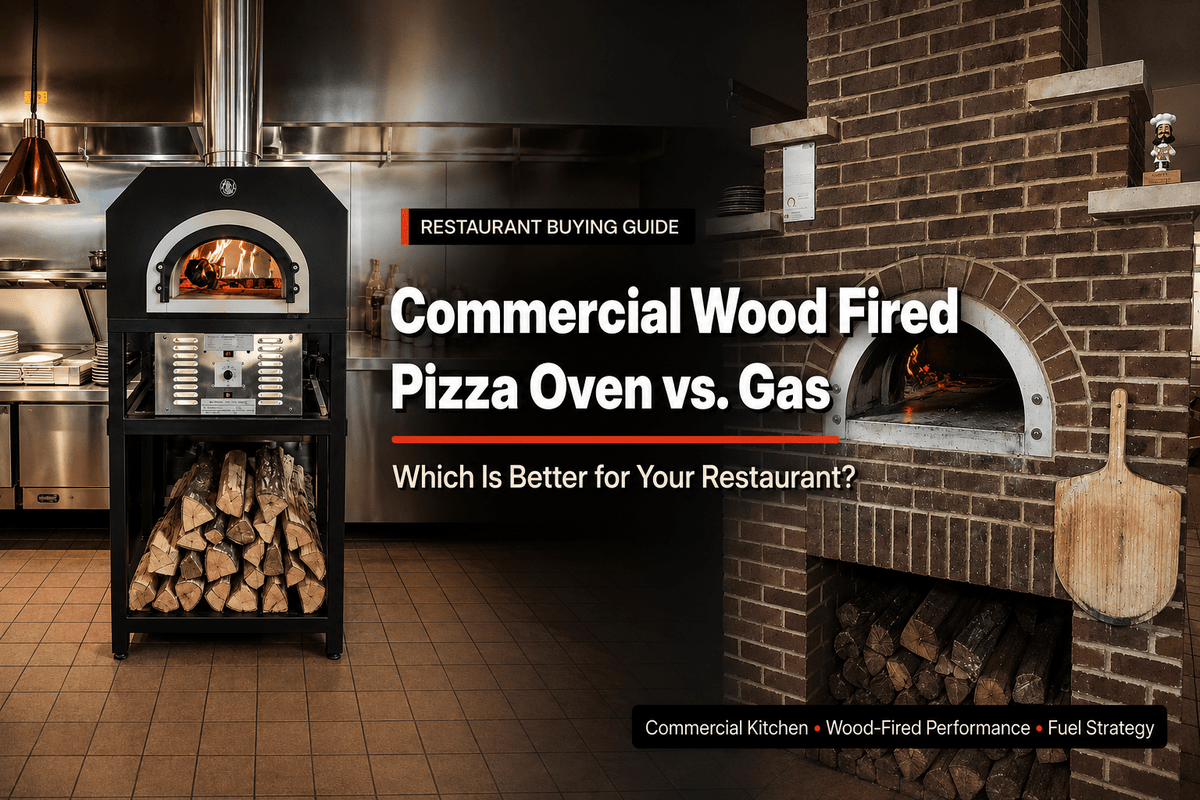
Commercial Wood Fired Pizza Oven vs Gas: Which Is Better for Your Restaurant?
Quick Answer
When comparing a commercial wood fired pizza oven vs gas, the right choice depends on your restaurant's concept, service style, and customer experience goals.
A commercial wood-fired oven delivers authentic flavor, dramatic live-fire cooking, and premium artisan appeal. A commercial gas pizza oven offers faster startup times, easier temperature control, and highly consistent output for busy kitchens. For many restaurants, a hybrid pizza oven commercial system that combines wood and gas provides the ideal balance of authenticity and operational efficiency.
At Chicago Brick Oven (CBO), we've seen restaurant owners succeed with all three approaches. The key is choosing a cooking system that aligns with your menu, volume, and long-term business objectives.
Why the Wood Fired vs Gas Pizza Oven Debate Matters
Today's restaurant guests expect more than just great food. They want an experience.
The oven itself has become part of the dining experience, especially in premium pizzerias, hospitality venues, and chef-driven restaurants. Whether you select a wood-fired, gas, or wood and gas pizza oven, your decision impacts:
- Food quality
- Cooking performance
- Kitchen workflow
- Labor requirements
- Energy consumption
- Customer perception
- Long-term operating costs
Understanding these differences can help you make a more profitable investment.
Commercial Wood-Fired Pizza Ovens: Authentic Performance and Customer Appeal
A commercial wood-fired pizza oven remains the gold standard for restaurants focused on artisan cooking and authentic Neapolitan-style pizza.
Chicago Brick Oven's commercial ovens are inspired by traditional Italian low-dome designs but engineered specifically for North American conditions. Combined with proprietary FlameRoll™ Technology, they create intense, evenly distributed heat that can reach temperatures up to 1,000°F.
Advantages of a Commercial Wood-Fired Oven
Authentic Wood-Fired Flavor
Nothing replicates the subtle smoky aroma and live-fire interaction produced by burning hardwood. This distinctive flavor profile helps restaurants create a memorable dining experience that customers actively seek out.
Premium Visual Experience
A visible flame instantly becomes a focal point within the restaurant. Guests enjoy watching pizzas, breads, and roasted dishes cook inside a live-fire oven, creating a sense of craftsmanship and authenticity.
High-Temperature Cooking
Wood-fired ovens excel at producing authentic Neapolitan pizza. With proper heat management, pizzas can cook in approximately 90 seconds while developing the sought-after leopard spotting and crisp crust texture.
Multi-Purpose Cooking Capability
A commercial wood-fired oven is far more than a pizza oven. Restaurants can use the same oven to:
- Roast meats
- Bake artisan bread
- Cook seafood
- Slow roast vegetables
- Prepare desserts
- Utilize cast iron cookware
This versatility helps maximize equipment utilization throughout service.
Challenges of Wood-Fired Ovens
Wood-fired cooking requires:
- Longer preheat times
- Fire management expertise
- Ash removal and maintenance
- Compliance with local fire regulations
- Proper ventilation systems
For restaurants that value craftsmanship and customer experience, these requirements are often outweighed by the premium results.
Commercial Gas Pizza Ovens: Efficiency and Consistency
A gas commercial pizza oven is often preferred by high-volume operations that prioritize speed and repeatability.
Gas systems provide precise temperature control with minimal operator intervention, making them attractive for busy kitchens where consistency is critical.
Advantages of Commercial Gas Pizza Ovens
Faster Startup
Gas ovens typically reach operating temperatures much faster than traditional wood-fired ovens, allowing kitchens to respond quickly to demand.
Consistent Temperature Control
Operators can adjust temperatures instantly, helping maintain uniform cooking results throughout service.
Reduced Labor Requirements
Unlike wood-fired cooking, gas systems do not require constant fire management, making staff training simpler.
Easier Maintenance
Without ash, soot, or wood storage requirements, daily cleaning and maintenance are generally easier.
Limitations of Gas Ovens
While modern gas ovens perform exceptionally well, they cannot fully replicate:
- Natural wood-fired aroma
- Live-flame interaction
- Traditional Neapolitan cooking environment
- The visual appeal of a wood-burning fire
For restaurants built around authentic artisan cooking, these differences can influence customer perception.
Hybrid Pizza Oven Commercial Systems: The Best of Both Worlds
Many modern operators no longer view the decision as strictly wood-fired versus gas.
A hybrid pizza oven commercial system combines both fuel sources, allowing restaurants to enjoy operational flexibility while maintaining authentic cooking characteristics.
A wood and gas pizza oven enables operators to:
- Start the oven quickly using gas
- Add wood for flavor and visual appeal
- Adjust fuel strategy based on service demands
- Maintain temperature more efficiently
- Balance authenticity with convenience
This flexibility is one reason hybrid systems are becoming increasingly popular among upscale restaurants and hospitality venues.
At Chicago Brick Oven, hybrid technology allows operators to preserve the live-fire experience while reducing some of the operational challenges associated with traditional wood-only systems.
Installation and Compliance Considerations
Commercial oven installation should never be viewed as an afterthought.
Restaurants must evaluate:
- Local building codes
- Fire safety regulations
- Ventilation requirements
- Fuel availability
- Kitchen layout
- Long-term maintenance access
One advantage of Chicago Brick Oven's commercial solutions is that they are engineered to meet rigorous U.S. standards.
Our ovens are UL Certified and NSF4 Certified, helping restaurants navigate compliance requirements with greater confidence compared to many imported alternatives.
Which Oven Is Best for Your Restaurant?
Choose a Commercial Wood-Fired Oven If:
- Authentic flavor is a priority
- You want a visual centerpiece
- Your concept focuses on artisan cooking
- Premium guest experience drives revenue
- You value traditional Neapolitan techniques
Choose a Commercial Gas Pizza Oven If:
- Speed and consistency are critical
- You operate a high-volume environment
- Staffing simplicity is important
- You want faster startup times
Choose a Hybrid Pizza Oven Commercial System If:
- You want flexibility
- You value both efficiency and authenticity
- Your menu includes multiple cooking styles
- You want the option of both wood and gas operation
Looking Beyond Fuel Type
While fuel choice is important, restaurant owners should also evaluate oven construction quality, durability, certifications, insulation performance, and cooking technology.
In our guide on Best Commercial Pizza Ovens for Restaurants: Top Features to Consider, we explore critical factors such as heat retention, cooking capacity, safety certifications, and long-term operational value. These features often have a greater impact on restaurant success than fuel type alone.
Final Thoughts
The commercial wood fired pizza oven vs gas debate ultimately comes down to balancing authenticity, efficiency, and customer experience.
Wood-fired ovens deliver unmatched flavor, visual appeal, and artisan craftsmanship. Gas ovens offer convenience, consistency, and operational simplicity. Hybrid systems bridge the gap by combining the advantages of both.
For restaurants seeking authentic Neapolitan performance, professional-grade durability, and flexibility for modern commercial kitchens, Chicago Brick Oven's American-made cooking systems provide a proven solution. Built with proprietary refractory materials, reinforced for extreme climates, and powered by FlameRoll™ Technology, our ovens are designed to help restaurants create memorable dining experiences where everything truly tastes better woodfired.
Leave a comment