
Pizza Peel vs Turning Peel: What’s the Difference?
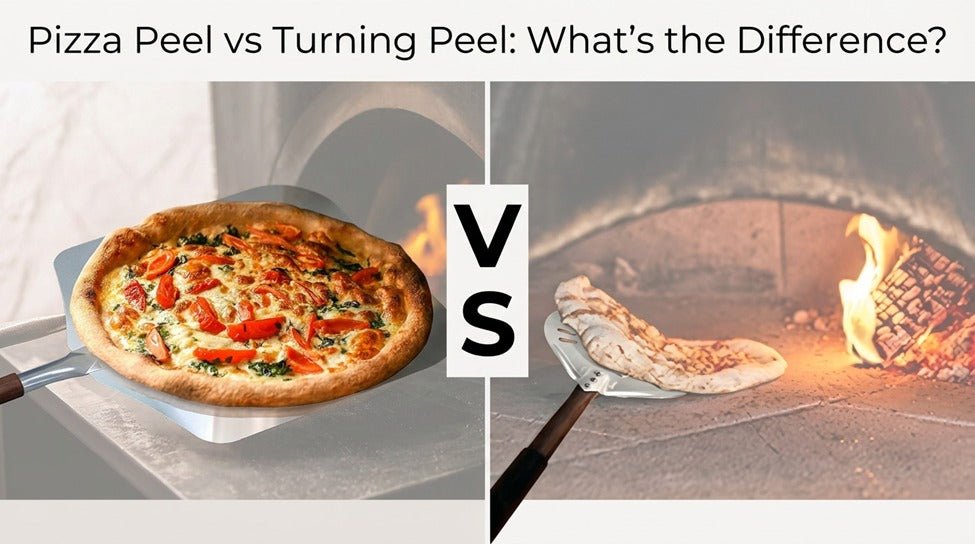
A launching peel carries raw pizza into the oven and helps retrieve it after baking. A turning peel has a smaller head for rotating and repositioning a pizza while it cooks. They do different jobs, so the useful question is how each fits your cooking routine—not which one replaces the other.
What Is a Launching Pizza Peel?
The larger, flat head supports the uncooked pizza during transfer. Choose a head that supports the size of pizza you make and a handle that provides suitable reach for your oven. Wood and metal versions are available; technique, dough moisture and keeping the surface clean and dry also affect sticking.
A launching peel can also retrieve a baked pizza. Check the tool's instructions and avoid leaving a wooden peel inside a hot oven.
What Is a Pizza Turning Peel?
A turning peel has a smaller, typically round metal head. Once the crust has set enough to move, it lets you rotate the pizza and adjust its position without carrying the whole pizza out of the oven. This is useful when the side nearest the flame browns faster than the far side.
A turning peel is not a replacement for a full-size launching surface: its smaller head is not designed to support a soft, fully topped raw pizza.
Launching Peel vs Turning Peel
| Feature | Launching peel | Turning peel |
|---|---|---|
| Main role | Transfer raw pizza and retrieve the finished pizza | Rotate and reposition during baking |
| Head | Large enough to support the pizza | Smaller, generally round |
| When used | Before and after baking | During baking, after the base sets |
| Selection checks | Pizza size, reach, material and handling | Head size, reach, thin edge and maneuverability |
Do You Need Both?
You may be able to turn pizza with a suitable full-size peel, depending on the oven space and your technique. A dedicated turning peel makes small adjustments easier without the larger head getting in the way. It is a useful upgrade for frequent pizza cooking, rather than a guarantee that every pizza will cook perfectly.
Both tools can be helpful from your first pizza onward. You do not need to progress through a prescribed wood-to-aluminum-to-turning-peel sequence.
A Practical Launch-and-Turn Workflow
- Prepare the pizza on a clean, dry launching peel and use only the dusting your recipe needs. Give it a small movement to check that it slides before approaching the oven.
- Launch onto the prepared cooking surface with appropriate reach and clearance from the flame.
- Let the base set enough to move, then use the turning peel to rotate the pizza as the browning requires. Do not force a tool under unset dough.
- Check the underside and toppings, then retrieve the cooked pizza with a suitable peel that supports it securely.
For the wider cooking sequence, see wood-fired pizza temperature, timing and technique.
Choose Tools for Your Oven
Check head width against your pizza size and oven opening, and choose a handle that lets you reach safely without leaning into the heat. A thin edge helps slide under the crust; manageable weight matters when turning several pizzas. Check the actual product dimensions instead of assuming every turning peel has the same head or handle length.
Browse CBO pizza peels and cooking tools for the current selection. For a broader discussion of materials, sizes and setup, see our pizza peel buying guide.
The Takeaway
The launching peel supports the pizza on the way in and out. The turning peel gives you finer control during the bake. Select compatible tools, practice the movement, and let the pizza's browning—not a rigid timer—guide your turns.
Leave a comment