
Radiant Heat, Convection & Conduction: How the FlameRoll™ Design Cooks Your Pizza
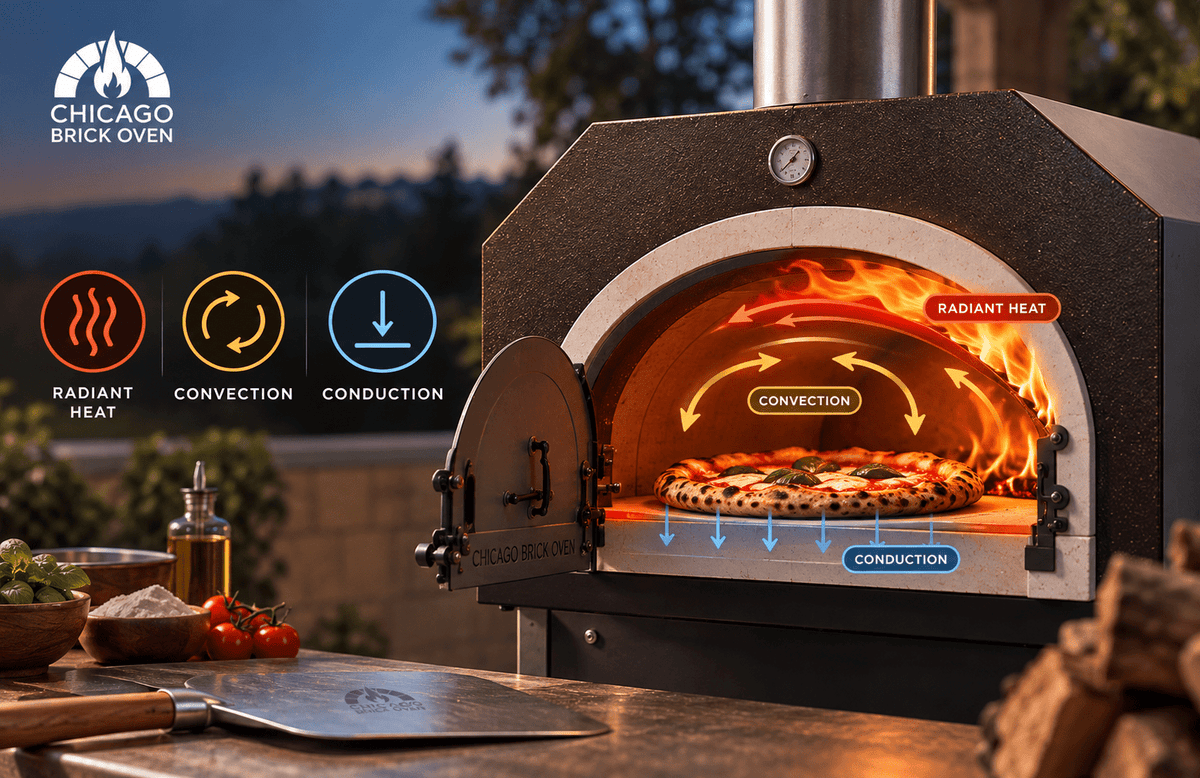
How does FlameRoll™ work in a pizza oven? The answer starts with understanding how three forms of heat radiant heat, convection, and conduction—work together inside a properly engineered brick oven.
In a Chicago Brick Oven, the low-dome, igloo-shaped cooking chamber is designed to create a powerful FlameRoll™ that moves concentrated heat horizontally across the dome and back down the sides. This heat circulation works together with the hot refractory cooking floor to create an environment where the top, bottom, and sides of a pizza can cook rapidly.
That combination is one reason a CBO pizza oven can reach temperatures exceeding 1,000°F and produce high-temperature pizza with a crisp, blistered crust and properly cooked toppings. CBO's commercial and residential ovens use three complementary cooking methods: radiant, convection, and conduction.
What Is FlameRoll™ Technology?
FlameRoll™ is Chicago Brick Oven's signature heat-circulation technology.
The concept begins with the oven's low, curved dome. Instead of allowing hot air and flame to rise vertically and exit without fully circulating through the cooking chamber, the oven's geometry encourages the heat to move across the top of the dome and down the opposite side.
CBO describes the FlameRoll™ as pulling the flame horizontally across the top of the dome and then vertically back down the side. This creates concentrated, high-temperature circulation throughout the cooking chamber.
The result is not simply a hotter oven. It is a cooking environment designed to make better use of the heat generated by the fire.
In simple terms:
“Fire creates the heat → the low dome directs it → FlameRoll™ circulates it → the hearth transfers heat into the dough.”
The result is a coordinated cooking process involving radiant heat, convection, and conduction.
The Three Types of Heat Inside a CBO Oven
Understanding these three heat-transfer methods makes it easier to understand why brick oven pizza cooks differently from pizza in a conventional kitchen oven.
1. Radiant Heat: Cooking the Top of the Pizza
Radiant heat travels directly from hot surfaces and the flame toward the food.
Inside a high-temperature outdoor pizza oven, the refractory dome becomes extremely hot. The visible flame also contributes intense radiant energy as it rolls across the dome.
That radiant heat reaches the top of the pizza, helping:
- Melt cheese quickly
- Brown toppings
- Develop blistering
- Caramelize ingredients
- Create the characteristic appearance of high-temperature pizza
This is particularly important when cooking at very high temperatures because the pizza may only be in the oven for a short period.
The top of the pizza needs intense heat while the bottom is simultaneously being cooked by the hearth.
2. Conduction: Creating the Crisp Bottom
Conduction is heat transferred through direct contact.
In a Chicago Brick Oven, the pizza dough sits directly on the heated refractory cooking floor. Heat moves from the hearth into the dough, cooking the underside of the crust.
This is what helps develop the crisp exterior of the pizza base while the interior remains soft and airy when the dough and cooking conditions are properly prepared.
The refractory cooking floor is therefore not simply a surface to place the pizza on. It is an active part of the cooking system.
This is why hearth temperature matters. A dome can be extremely hot, but if the cooking floor has not absorbed sufficient heat, the pizza may not develop the bottom texture you expect.
3. Convection: Moving Hot Air Around the Pizza
Convection involves the movement of heated air and gases through the cooking chamber.
As the fire burns, hot gases move through the oven. The low-dome geometry encourages these hot gases and flames to circulate across the dome and down toward the cooking area.
In CBO's FlameRoll™ design, this movement is an important part of creating high, even temperatures throughout the chamber. CBO describes its FlameRoll™ as generating high and even temperatures for cooking pizza and a wide range of other foods.
Convection helps surround the pizza with hot air rather than relying entirely on direct contact with the hearth or direct radiation from the flame.
How FlameRoll™ Brings the Three Heat Types Together
The real advantage comes from combining all three forms of heat.
Imagine a pizza entering a properly heated CBO oven.
- From below: the refractory hearth transfers heat directly into the dough through conduction.
- From above: the hot dome and active flame deliver intense radiant heat to the cheese and toppings.
- Around the pizza: hot gases circulate through the cooking chamber through convection.
At the same time, FlameRoll™ keeps the heat moving through the low-dome cooking chamber.
This creates a more complete cooking environment than simply placing a pizza on a hot surface.
The cooking equation is simple:
- Conduction = crisping the bottom
- Radiant heat = browning the top
- Convection = circulating heat around the pizza
- FlameRoll™ = engineered heat circulation through the dome
Together, these mechanisms help explain the distinctive performance of a CBO brick oven.
Why the Low-Dome Shape Matters
The shape of a brick oven is not merely an aesthetic choice.
Chicago Brick Oven uses a low, igloo-shaped dome inspired by traditional Italian oven design. Its geometry is engineered to support heat retention and circulation.
In a CBO oven, the dome works with the FlameRoll™ design to direct the flame horizontally across the ceiling before it moves downward along the side of the cooking chamber.
This is fundamentally different from treating the oven as an empty box with a fire inside.
The dome becomes part of the heat-management system.
It absorbs intense heat, contributes radiant heat back toward the food, and helps guide the movement of hot gases through the cooking chamber.
Why High Heat Matters for Pizza
Traditional high-temperature pizza benefits from an environment where the dough can cook quickly without drying out the entire pizza.
CBO ovens are engineered to reach temperatures in excess of 1,000°F, depending on the model and operating conditions. CBO states that its FlameRoll™ technology generates high, even temperatures for pizza and other foods.
At these temperatures, cooking happens rapidly.
The hot hearth begins cooking the crust immediately. Meanwhile, radiant heat from the dome and flame works on the cheese and toppings.
That combination helps create the contrast many people look for in high-temperature brick oven pizza: a crisp, developed exterior with a softer interior.
CBO notes that its ovens can cook pizza in as little as approximately 90 seconds to several minutes depending on temperature and dough style.
Why FlameRoll™ Is About More Than Pizza
Although FlameRoll™ is especially valuable for pizza, its benefits extend to other foods.
CBO ovens are designed for high-temperature cooking of:
- Artisan bread
- Roasted meats
- Vegetables
- Fish
- Cast-iron dishes
- Desserts
- Bubbling cheeses
- Other wood-fired dishes
The same combination of radiant, convection, and conduction heat that cooks pizza can be used to create different textures and cooking results across an entire menu. CBO specifically positions FlameRoll™ as a technology for cooking everything from grilled meats and roasted vegetables to pizza and other dishes.
That is why Chicago Brick Oven considers its products more than single-purpose pizza appliances.
They are multi-function artisan cooking systems built around high-temperature live-fire cooking.
FlameRoll™ and the CBO Refractory System
Heat circulation is only one part of the equation. The oven also needs to retain that heat.
Chicago Brick Oven uses a proprietary blend of commercial-grade refractory cement designed to hold heat and withstand repeated high-temperature cooking. CBO's refractory materials incorporate alumina, silica, and stainless steel fibers, while insulation helps improve heat retention.
This combination allows the oven to store significant thermal energy while FlameRoll™ continuously circulates heat through the cooking chamber.
In other words:
The refractory materials help hold the heat.
The dome helps direct the heat.
FlameRoll™ helps circulate the heat.
The hearth transfers heat into the food.
That is the engineering relationship behind the cooking process.
How to Get the Most From FlameRoll™
A high-performance oven still depends on proper operation.
For the best results, focus on:
Preheat the Oven Properly
Allow the refractory dome and hearth to absorb sufficient heat before cooking. A high air temperature alone does not guarantee that the cooking floor is ready.
Monitor Hearth Temperature
An infrared thermometer can help determine whether the cooking floor is at an appropriate temperature for the pizza style you're preparing.
Manage the Fire
Maintain an appropriate live fire rather than focusing solely on achieving the highest possible temperature.
Rotate the Pizza
Even with engineered heat circulation, the pizza may need to be rotated during cooking, particularly when cooking close to an active flame.
Use Appropriate Wood
For CBO wood-fired ovens, use properly dried and aged hardwood according to the manufacturer's operating guidance.
Why This Matters When Choosing a Pizza Oven
When comparing pizza ovens for sale, it can be tempting to focus on one specification maximum temperature, burner output, cooking surface, or price.
But the cooking chamber's engineering matters just as much.
A high-performance pizza oven needs to manage heat, not simply generate it.
Chicago Brick Oven approaches this through a combination of low-dome geometry, proprietary refractory construction, insulation, and FlameRoll™ technology. The result is a cooking system designed to use radiant heat, convection, and conduction together.
That engineering is part of what separates a purpose-built brick oven from a simple high-temperature cooking box.
Frequently Asked Questions
How does FlameRoll™ work in a pizza oven?
FlameRoll™ uses Chicago Brick Oven's low-dome geometry to direct the flame and concentrated heat horizontally across the top of the dome and then vertically down the side of the cooking chamber. This creates high, even temperatures while supporting radiant, convection, and conduction cooking.
What are the three types of heat used to cook pizza in a CBO oven?
Chicago Brick Oven ovens use radiant heat, convection, and conduction. Radiant heat from the hot dome and flame cooks the top of the pizza, conduction from the heated hearth cooks the bottom, and convection circulates hot gases throughout the cooking chamber.
Why does a pizza oven have a low dome?
The low-dome shape helps retain and circulate heat inside the cooking chamber. In a Chicago Brick Oven, the dome works with FlameRoll™ technology to move the flame horizontally across the dome and back down the side, supporting high-temperature cooking.
How hot can a Chicago Brick Oven get?
Chicago Brick Oven states that its ovens can reach temperatures in excess of 1,000°F, depending on the model and operating conditions. This high-temperature environment supports rapid pizza cooking and other high-heat cooking techniques.
Does FlameRoll™ only benefit pizza?
No. FlameRoll™ is designed to generate high, even temperatures that can be used for pizza as well as grilled meats, roasted vegetables, bread, bubbling cheeses, desserts, and other dishes.
Final Takeaway
A great brick oven does more than produce extreme heat. It manages and directs that heat.
In a Chicago Brick Oven, the low-dome design and FlameRoll™ technology work with the refractory hearth to create a cooking environment where radiant heat cooks the top, conduction develops the crust from below, and convection circulates heat around the food.
That combination is at the heart of the CBO cooking experience.
It is also why FlameRoll™ is more than a marketing term. It represents an engineered approach to heat circulation designed to help a Chicago Brick Oven cook pizza and much more with the intensity, speed, and character of true live-fire cooking.
Three types of heat. One engineered cooking system. Everything tastes better woodfired.
Leave a comment