
Cooking Wood-Fired Pizza: Temperature, Timing & Technique
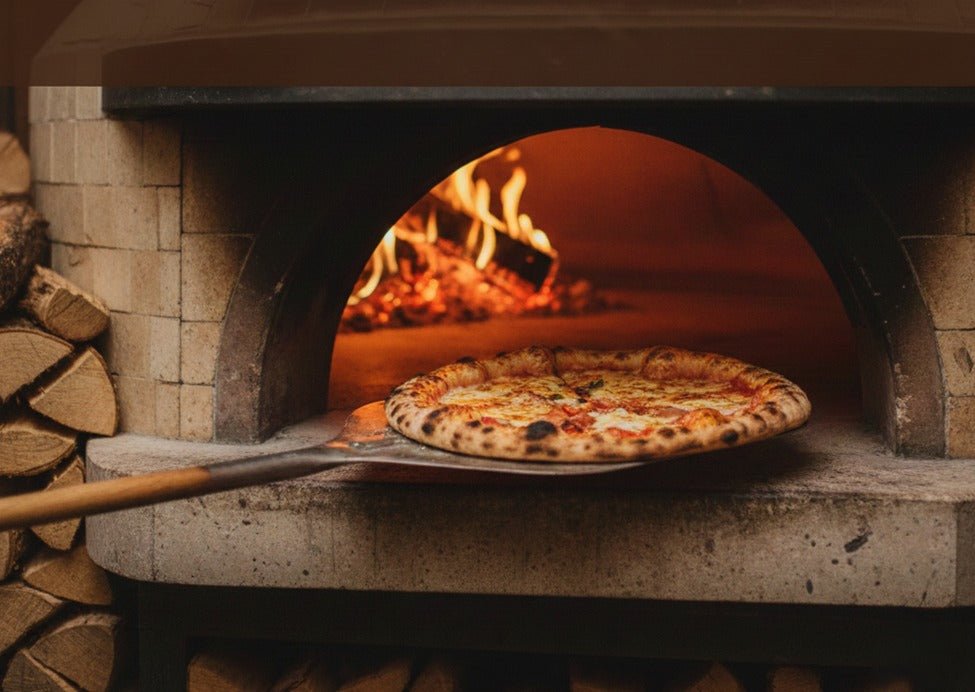
Cooking pizza in a wood-fired oven brings together dough preparation, hearth temperature, live-fire management and a smooth launch. This guide follows the meal from preparation to serving. Your dough recipe and pizza style determine the cooking approach; there is no single temperature or two-minute promise that fits every pizza.
Prepare the Oven and Fire
Start with a properly installed and cured oven. Follow the CBO wood-burning oven manual and our fire-starting guide: begin with dry kindling, add wood gradually and heat the oven slowly. The manual describes starting kindling 10 inches from the front and moving the established fire toward the back as it grows. Never use chemicals or starter fluids, and do not build a fire that spills out of the opening.
Use dry, seasoned hardwood. Our cooking-wood guide explains selection and storage. A whitish-gray dome is part of the manual's firing guidance, but do not substitute appearance for measuring the cooking surface and assessing the recipe's needs. Warm-up time varies with model, weather and moisture.
Choose Temperature and Timing for Your Pizza
Thin Neapolitan-style dough and a thicker New York-style pizza do not require identical baking conditions. Check the hearth with an infrared thermometer and follow a recipe suited to your oven and pizza style. The surface reading is not the same as air temperature or the food's internal temperature.
For style-by-style guidance, see pizza oven temperatures for Neapolitan, New York and frozen pizzas. For a broader explanation of heat, see how hot pizza ovens get. Use those guides alongside the model manual rather than treating maximum oven temperature as a cooking target.
Prepare Dough and Toppings
Use a dough recipe designed for the style you want. Stretch evenly without tearing the center and leave the rim appropriate to that style. Keep toppings balanced rather than piling on wet ingredients; excess moisture and thick toppings can leave the center undercooked while the edges brown.
For a simple Margherita-style pizza, try tomato sauce, mozzarella and basil. For a different combination, consider pear and gorgonzola, or prosciutto and arugula added at the stage your recipe specifies. Prepare meats and other toppings according to their food-safety requirements; a quickly browned pizza does not guarantee raw toppings have cooked safely.
Launch, Turn and Finish
- Prepare the peel. Use a peel that supports the pizza, with a light dusting appropriate to your recipe. Check that the pizza slides before approaching the oven; avoid excessive loose flour that can burn.
- Launch onto the prepared hearth. Keep clear of the flame and use the reach and tools appropriate to your oven.
- Watch and turn. Once the base has set enough to move, rotate the pizza as needed so the side facing the heat does not burn. Watch the underside as well as the rim; turn according to actual browning rather than a fixed stopwatch interval.
- Check and remove. Look for a cooked base and center, and fully cooked toppings. If the rim burns before the middle cooks, revisit dough thickness, topping quantity and temperature for the next pizza.
Our launching versus turning peel guide explains which tool to use at each stage.
Serve and Keep the Next Pizza Moving
Transfer the pizza to a serving board and let it settle briefly before slicing. A salad or olives can complete the meal without crowding the oven. Have the next dough and toppings ready, but keep raw ingredients handled and stored safely while you cook.
Common Mistakes to Avoid
- Rushing the initial firing or cooking before the hearth is ready.
- Using damp wood or unsafe starter fluids.
- Assuming every pizza should cook at the oven's hottest setting.
- Overloading toppings or leaving raw dough on the peel until it sticks.
- Closing a decorative door over an active fire or using water to cool the oven.
Follow your model's shutdown instructions after cooking. If you are still choosing an oven, browse residential pizza ovens; if you already own one, focus on learning its heat and your preferred dough. For other courses, see what to cook besides pizza.
Leave a comment