
Pizza Oven Troubleshooting: Common Problems and How to Fix Them
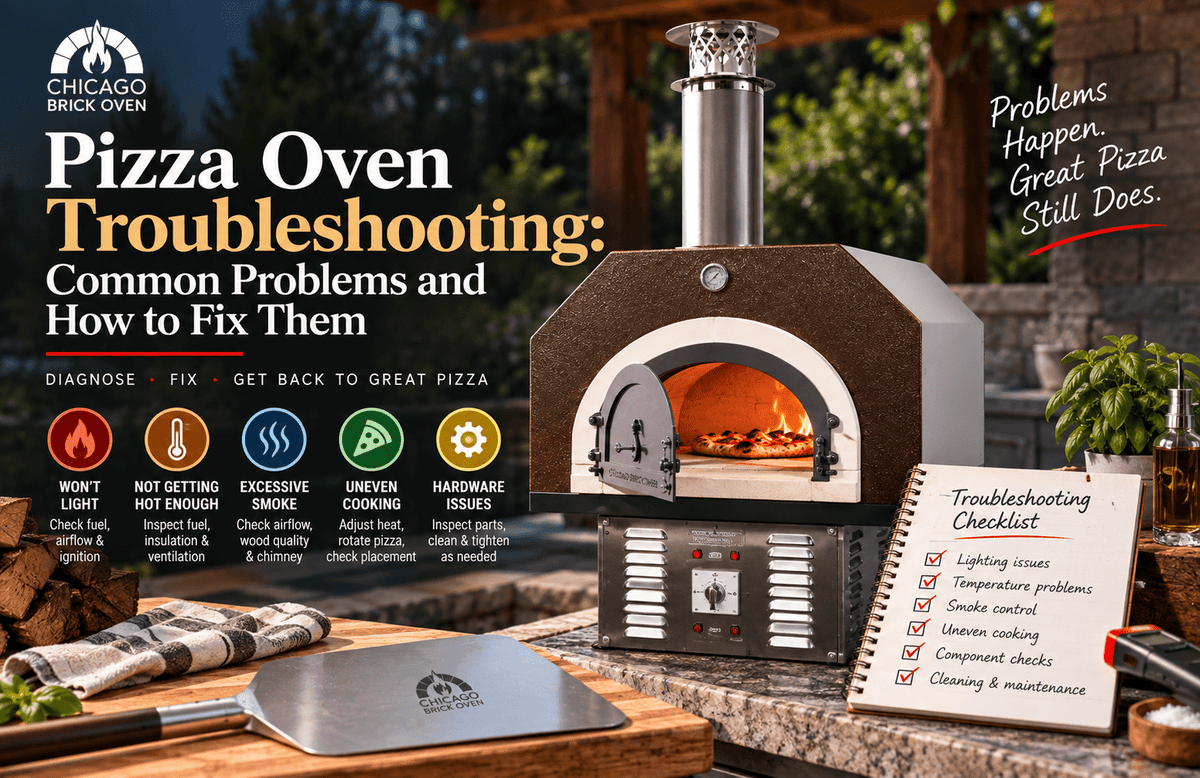
Even a high-performance pizza oven can produce inconsistent results when the fire, fuel, temperature, airflow, or cooking technique is not quite right. If your pizza is burning underneath, staying soggy in the center, cooking unevenly, or your oven is struggling to reach temperature, the problem is usually easier to identify than it first appears.
This pizza oven troubleshooting guide focuses on common issues CBO owners may encounter with a Chicago Brick Oven, including wood-fired and hybrid models. The first step is always to determine whether the problem comes from the oven itself, the fuel, the cooking surface, or the way the oven is being operated.
“Quick answer: If your CBO oven is not heating properly, first check that it is dry and properly sealed, use properly dried and aged hardwood, build the fire gradually, and make sure the flue is heated and airflow is unobstructed. For hybrid ovens, gas-related problems should be handled according to the specific model's instructions and by qualified professionals when necessary.”
1. Why Isn't My Pizza Oven Getting Hot Enough?
One of the most common questions about an outdoor pizza oven is why it is not reaching the expected cooking temperature.
For a Chicago Brick Oven wood-fired model, start with the basics. Make sure the oven is properly sealed and has not taken on moisture. CBO also recommends using dried, aged hardwood, because wet or improperly seasoned wood can make it difficult to build and maintain the intense fire required for high-temperature cooking.
Once the initial fire is established and the flue is heated, gradually add larger pieces of wood as the oven temperature increases.
For high-temperature pizza cooking, CBO recommends spreading the hot coals across the hearth and allowing them to sit for approximately 20 minutes. This helps transfer heat into the cooking floor rather than relying only on the visible flame.
Check these first:
- Is the oven dry?
- Is the flue open and unobstructed?
- Are you using properly dried hardwood?
- Has the oven been properly cured?
- Are you building the fire gradually?
- Has the hearth had enough time to absorb heat?
Chicago Brick Oven ovens are engineered for high-temperature cooking, with models capable of reaching 1,000°F or more under appropriate conditions. The low-dome design and FlameRoll™ technology help circulate heat throughout the cooking chamber.
2. Why Is My Pizza Burning on the Bottom?
A burnt pizza bottom usually means the hearth is hotter than the pizza requires, the pizza is sitting in one location too long, or excess flour has accumulated underneath the dough.
High-temperature pizza ovens cook extremely quickly. Neapolitan-style pizza is typically cooked at approximately 800°F–1,000°F, with cooking times around 60–90 seconds.
At these temperatures, small differences in technique can make a noticeable difference.
Try this:
- Rotate the pizza earlier. Don't leave the same section of the crust directly over the hottest part of the hearth for too long.
- Use less launch flour. Excess flour or semolina underneath the pizza can burn rapidly at high temperatures.
- Check hearth temperature. An infrared thermometer can help you understand whether the cooking surface is ready for the style of pizza you are making.
- Allow the oven to stabilize. Reaching a high temperature is not the only objective. You also want the dome and hearth to be properly heat-saturated.
The goal is balanced heat—not simply the highest possible temperature.
3. Why Is the Middle of My Pizza Soggy?
A soggy center can happen when the hearth has not stored enough heat, the pizza contains too much moisture, or the dough is overloaded with toppings.
The cooking floor needs sufficient stored heat to cook the bottom while the dome supplies intense radiant heat to the top.
Try these fixes:
- Fully preheat the oven before cooking.
- Use an infrared thermometer to monitor the hearth.
- Avoid excessive sauce or wet toppings.
- Drain or blot high-moisture ingredients.
- Avoid overloading the center of the pizza.
- Make sure the dough is stretched evenly.
A properly heated CBO oven uses the interaction of radiant, convection, and conduction heat to cook pizza rapidly and evenly.
4. Why Is My Pizza Cooking Unevenly?
Uneven cooking is often related to the location of the pizza relative to the fire.
In a traditional outdoor wood fired pizza oven, the fire creates an active heat zone. One part of the cooking surface can therefore be hotter than another.
Instead of expecting the pizza to cook perfectly without movement, learn to work with the heat pattern.
Rotate the pizza during cooking so different sections of the crust spend time in the hotter areas. For high-temperature Neapolitan-style pizza, you may need to rotate several times during a short cooking cycle.
Chicago Brick Oven's FlameRoll™ technology is designed to create concentrated heat circulation through the low-dome cooking chamber. The flame rolls across the dome and down toward the cooking surface, supporting high and even temperatures.
5. My Wood Fire Is Weak or Producing Too Much Smoke
Wood quality is one of the first things to investigate when your fire does not behave as expected.
Chicago Brick Oven recommends dry, aged hardwood for wood-fired cooking. Moisture in the fuel makes combustion less efficient and can make it harder to reach high temperatures.
If your fire is producing excessive smoke, check the wood first and make sure the chimney and flue are unobstructed.
Do not burn inappropriate materials in the oven. Your pizza oven should be fueled according to the manufacturer's instructions for your specific model.
6. My Hybrid Pizza Oven Won't Ignite
If you own a CBO hybrid model, troubleshooting is slightly different because the oven incorporates both gas and wood.
CBO hybrid ovens such as the CBO-750 use a two-burner gas system consisting of an infrared burner beneath the hearth and an ambient burner at the back. They can also burn wood at the back or side of the oven to introduce authentic wood-fired flavor.
If the gas burner does not ignite:
- Confirm that the correct fuel supply is available.
- Check that the gas supply and controls are being operated according to the model's instructions.
- Inspect accessible connections for obvious damage.
- Follow the ignition procedure in your CBO owner's manual.
- If the burner still does not operate correctly, stop troubleshooting the gas components yourself and contact CBO support or a qualified gas professional.
Do not disassemble gas components or attempt repairs beyond your qualifications.
CBO hybrid ovens are configured for either natural gas or propane, depending on the model and configuration. CBO specifically states that the gas type must be designated when ordering and cannot be retrofitted in the field on applicable hybrid models.
7. What If the Gas Flame Looks Yellow?
A gas flame that does not appear normal should not be ignored.
Turn off the gas system and follow the safety and troubleshooting instructions for your specific CBO model. If you suspect incomplete combustion, a gas leak, damaged burner, or another gas-system problem, have the appliance inspected by a qualified professional.
Do not continue operating a gas appliance when you are unsure whether combustion is occurring safely.
8. Why Is My Oven Taking Longer to Heat Than Before?
If your outdoor wood burning pizza oven previously reached temperature efficiently but now takes considerably longer, investigate changes in fuel, moisture, airflow, and operating conditions.
Check:
- Wood quality and moisture
- Chimney and flue condition
- Oven sealing
- Accumulated ash or debris
- Outdoor temperature
- Whether the oven has been exposed to moisture
- Whether the firing technique has changed
CBO specifically identifies moisture, improper wood, insufficient firing, and airflow-related factors as possible reasons an oven may not heat properly.
Cold weather also matters. If you are using a CBO oven when outdoor temperatures are low, follow the manufacturer's guidance for gradually heating the oven to reduce thermal stress.
9. When Should You Stop Troubleshooting?
Not every pizza oven problem should be fixed by the owner.
Stop using the oven and seek professional or manufacturer assistance if you encounter:
- A suspected gas leak
- Damaged gas lines or burners
- Persistent abnormal gas flames
- A blocked or damaged flue
- Significant structural damage
- Unusual cracking or shifting
- Persistent problems after following the manufacturer's operating instructions
For gas systems especially, safety takes priority over troubleshooting.
A Simple CBO Pizza Oven Troubleshooting Checklist
Before your next cook, work through these questions:
- Is the oven properly sealed and dry?
- Am I using properly dried, aged hardwood?
- Is the chimney and flue unobstructed?
- Has the oven been properly cured?
- Has the hearth had enough time to absorb heat?
- Is the hearth temperature appropriate for my pizza style?
- Am I using too much flour or semolina under the dough?
- Am I rotating the pizza during cooking?
- Are my toppings adding excessive moisture?
- If using a hybrid oven, is the gas system operating according to the manual?
- Am I attempting a repair that should be handled by a professional?
Built for High-Temperature Outdoor Cooking
Chicago Brick Oven approaches pizza oven performance as an engineering challenge—not simply a question of getting an oven hot.
CBO combines traditional Italian low-dome design with modern American engineering, proprietary refractory cement reinforced with stainless steel fibers, and FlameRoll™ technology.
The low dome helps concentrate and circulate heat, while FlameRoll™ creates the rolling flame pattern that supports high-temperature cooking. The result is an outdoor cooking environment designed for pizza as well as bread, roasted meats, vegetables, fish, desserts, and other dishes.
That engineering is particularly important when you're working at temperatures approaching 1,000°F.
Final Thoughts
Most pizza oven troubleshooting starts with four things: fuel, airflow, temperature, and technique.
For a Chicago Brick Oven, make sure the oven is dry and properly sealed, use quality aged hardwood, establish the fire correctly, allow the hearth and dome to heat thoroughly, and work with the oven's natural heat pattern.
If you're cooking pizza at extreme temperatures, remember that reaching 900°F or 1,000°F is only part of the equation. Consistent results come from balancing hearth temperature, dome heat, flame movement, cooking time, and pizza preparation.
And if the problem involves gas components, structural damage, or a safety concern, don't guess follow your model-specific documentation and contact Chicago Brick Oven or a qualified professional.
The right fire, the right heat, and the right technique turn a high-performance outdoor pizza oven into an exceptional cooking system.
Frequently Asked Questions
Why is my Chicago Brick Oven not getting hot enough?
Check that the oven is dry and properly sealed, use dried and aged hardwood, make sure the flue is heated and unobstructed, and gradually build the fire with larger pieces of wood. CBO also recommends spreading the coals across the hearth and allowing them to sit for approximately 20 minutes.
Why is my pizza burning underneath but not cooking on top?
The hearth may be hotter than the dome or the pizza may be sitting too long in one position. Allow the oven to properly heat and stabilize, monitor the hearth temperature, and rotate the pizza during cooking so the crust is exposed to the heat more evenly.
Why is my pizza soggy in the middle?
A soggy center can result from insufficient hearth heat, excessive moisture in the toppings, or an overloaded pizza. Fully preheat the oven, reduce wet toppings, and make sure the cooking floor has stored enough heat before launching the pizza.
How do I troubleshoot a CBO hybrid pizza oven that won't ignite?
First follow the ignition procedure for your specific CBO model and verify that the correct gas supply is available. If the burner does not operate normally, do not disassemble the gas system. Contact Chicago Brick Oven or a qualified gas professional for further assistance.
Can I cook more than pizza in a Chicago Brick Oven?
Yes. CBO ovens are designed as versatile high-temperature cooking systems. In addition to pizza, they can be used for artisan bread, roasted meats, vegetables, fish, desserts, and cast-iron cooking.
Leave a comment