
Ranges & Rangetops Explained: Dual Fuel, Sealed vs. Open Burners
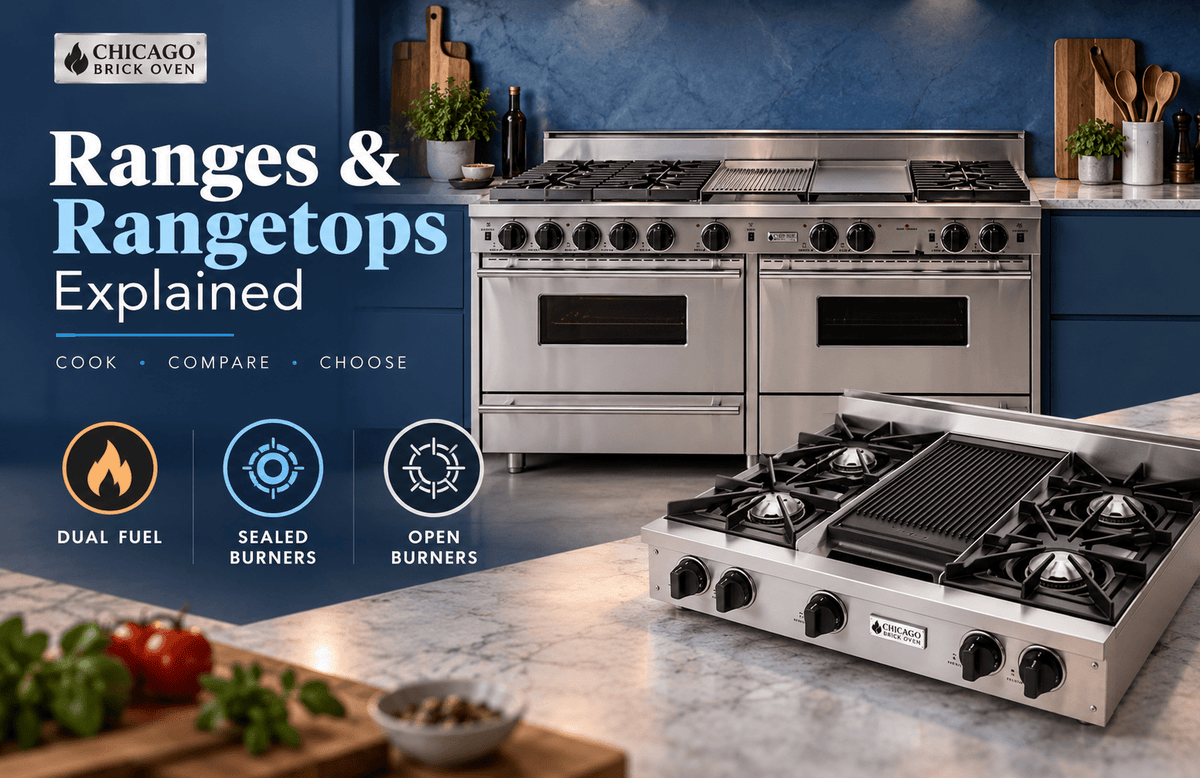
Choosing a professional-style cooking appliance often comes down to three questions: Do you want a dual fuel range or an all-gas range? Do you prefer sealed or open burners? And do you need a complete range or a gas rangetop?
These choices affect how you cook, how much control you have over the burners, how the oven performs, and how much flexibility you have in the kitchen.
Chicago Brick Oven brings the same performance-focused approach found throughout its cooking equipment to its range and rangetop collection. Its lineup includes dual fuel ranges, all-gas ranges, gas rangetops, sealed burners, and open burners, giving home cooks and culinary enthusiasts options based on their cooking style rather than a one-size-fits-all design.
What Is a Dual Fuel Range?
A dual fuel range combines a gas cooktop with an electric oven.
The concept is straightforward:
- Gas on top = responsive stovetop control.
- Electric in the oven = consistent convection baking and roasting.
Gas burners provide an immediate visual indication of flame and allow you to adjust heat directly. This makes gas particularly useful for tasks such as searing, sautéing, boiling, and low-temperature simmering.
The electric oven, meanwhile, can provide controlled convection heat for baking and roasting.
Chicago Brick Oven's dual-fuel ranges pair gas burners with an electric convection oven. For example, CBO's 30-inch dual-fuel sealed-burner range features a 3.69-cubic-foot electric oven with TurboFlow™ convection, three racks, and self-cleaning functionality.
This combination makes a dual fuel range particularly appealing to cooks who want strong gas cooking performance without giving up the characteristics of an electric convection oven.
Why Choose Gas Burners?
Gas cooktops and rangetops are valued for their responsiveness.
When you turn a gas burner up or down, the flame provides immediate visual feedback. You can see the change and adjust the cooking temperature while working with a pan.
Depending on the model, CBO burners are designed to provide both high-output cooking and low-temperature control.
For example, CBO's 36-inch dual-fuel sealed-burner range includes front Ultra High-Low™ burners ranging from 350 to 21,000 BTUs, while the rear burners range from 300 to 9,500 BTUs.
That range of output matters because professional cooking isn't always about maximum heat. A good cooking system needs to move from high-heat searing to controlled simmering.
What Is a Gas Rangetop?
A gas rangetop is essentially the cooking surface without the integrated oven.
It gives you the burner performance and cooking workspace of a professional gas range while allowing you to choose a separate oven configuration underneath or elsewhere in the kitchen.
This can be particularly useful for custom kitchen designs where the cooktop and oven need to be positioned independently.
Chicago Brick Oven offers gas rangetops with both sealed-burner configurations and professional features such as continuous cast-iron grates, electronic ignition, and optional griddles.
For example, the CBO 48-inch natural-gas rangetop with sealed burners offers up to 14,000 BTUs on high, with lower settings of 5,200 and 2,100 BTUs and front Vari-Flame™ burners capable of simmering down to 400 BTUs.
Sealed vs. Open Burners: What's the Difference?
One of the most important decisions when selecting a professional-style gas appliance is whether you want sealed burners or open burners.
What Is a Sealed Burner Gas Range?
A sealed burner gas range has a burner assembly positioned beneath a sealed cooking surface or burner cap. Food and liquid are less likely to fall directly into the burner components, making the surface relatively straightforward to clean.
Sealed burners are a popular choice for homeowners who want professional-style gas cooking with an emphasis on everyday convenience.
Chicago Brick Oven offers sealed-burner ranges and rangetops across its lineup. Its 36-inch all-gas convection range, for example, is available with four or six sealed burners, with front Ultra High-Low™ burners providing up to 21,000 BTUs.
What Is a Gas Rangetop With Open Burners?
A gas rangetop with open burners exposes more of the burner assembly beneath the cooking grate.
The design is commonly associated with professional-style cooking because the open configuration allows the flame to interact directly with the underside of the cookware.
Open burners can provide strong heat and responsive control, making them appealing to cooks who prioritize high-output stovetop performance.
Chicago Brick Oven offers open-burner gas ranges as part of its professional-style collection. Its 30-inch all-gas range with open burners, for example, uses four open burners with settings up to 14,000 BTUs and a Vari-Flame™ simmer range from 400 to 1,050 BTUs.
Sealed Burners vs. Open Burners
The choice isn't simply about which burner is "better." It depends on how you cook.
|
Feature |
Sealed Burners |
Open Burners |
|
Cleaning |
Easier everyday cleanup |
Requires more attention around burner components |
|
Cooking style |
Excellent for everyday cooking |
Well suited to high-output cooking |
|
Flame exposure |
Burner is enclosed beneath the grate |
More of the burner assembly is exposed |
|
Heat control |
Precise and versatile |
Responsive and performance-oriented |
|
Best suited for |
Home cooks seeking convenience + performance |
Cooks prioritizing professional-style burner performance |
If your priority is straightforward cleanup combined with powerful cooking, sealed burners can be an excellent choice.
If you want a more traditional professional-style burner configuration and prioritize high-output stovetop cooking, an open-burner design may be the better fit.
Dual Fuel vs. All-Gas Range
Another major decision is choosing between dual fuel and all-gas.
Dual Fuel Range
A dual fuel range combines:
- Gas burners
- Electric convection oven
- Gas and electrical connections
This configuration is attractive to cooks who want responsive gas burners with an electric oven.
All-Gas Range
An all-gas range uses gas for both the cooktop and oven.
This can appeal to cooks who prefer a consistent gas cooking system throughout the appliance.
Chicago Brick Oven offers both configurations, including all-gas ranges with sealed and open burners.
The right choice depends on your cooking preferences, available utilities, kitchen design, and the type of control you want from your oven.
What About Gas Rangetops?
A gas rangetop makes sense when you want to separate your stovetop and oven decisions.
For example, you may want a professional gas rangetop with sealed burners while installing a separate wall oven underneath the counter or elsewhere in the kitchen.
This can provide greater flexibility when designing a custom kitchen.
Chicago Brick Oven's rangetop collection includes 36-inch and 48-inch configurations with sealed burners, natural gas or propane options depending on the model, and professional-style features such as cast-iron grates and griddles.
How to Choose the Right Configuration
Start with how you actually cook.
Choose a Dual Fuel Range If:
You want responsive gas burners but prefer the controlled characteristics of an electric convection oven for baking and roasting.
Choose an All-Gas Range If:
You prefer gas cooking throughout the appliance and want the same fuel source for both the cooktop and oven.
Choose Sealed Burners If:
Everyday convenience and easier cleanup are important while still maintaining professional-style burner performance.
Choose Open Burners If:
You prioritize a professional-style cooking surface and high-output burner performance.
Choose a Gas Rangetop If:
You want flexibility to pair a professional gas cooking surface with a separate oven configuration.
CBO's Approach to Professional Cooking
Chicago Brick Oven is best known for its high-performance wood-fired brick ovens, but its cooking equipment ecosystem extends beyond outdoor pizza ovens.
The company's range and rangetop collection applies the same performance-focused philosophy to indoor cooking, with features including Ultra High-Low™ burners, Vari-Flame™ simmer control, TurboFlow™ convection, cast-iron griddles, continuous cast-iron grates, electronic ignition, and professional-style construction.
This creates a broader cooking system for people who care about high-temperature performance, precise control, and versatility.
And for cooks who already use a Chicago Brick Oven pizza oven, a professional CBO range can complement the outdoor cooking experience by bringing similar attention to performance into the indoor kitchen.
Installation Considerations
Before purchasing a range or rangetop, confirm the fuel and utility requirements for your selected model.
A dual fuel range generally requires both a gas connection for the burners and an appropriate electrical connection for the electric oven.
Your kitchen may also require appropriate ventilation, clearances, and professional installation based on the appliance and local requirements.
Always follow the installation instructions for the exact CBO model you select and work with qualified professionals where required.
Frequently Asked Questions
What is the difference between a dual fuel range and an all-gas range?
A dual fuel range combines a gas cooktop with an electric oven, while an all-gas range uses gas for both the cooktop and oven. Dual fuel is popular with cooks who want responsive gas burners and an electric convection oven.
Are sealed or open burners better?
Neither is universally better. Sealed burners generally prioritize easier everyday cleanup, while open burners provide a professional-style configuration favored by cooks who prioritize high-output stovetop performance. Your cooking habits should determine the choice.
What is a gas rangetop?
A gas rangetop is a standalone gas cooking surface without an integrated oven. It allows homeowners to pair the cooking surface with a separate oven and can provide greater flexibility in a custom kitchen design.
Does Chicago Brick Oven offer sealed and open burner ranges?
Yes. Chicago Brick Oven offers professional-style ranges with both sealed and open burner configurations, as well as all-gas and dual-fuel options.
What BTU output do CBO gas burners provide?
CBO burner output varies by model and burner position. For example, the 36-inch dual-fuel sealed-burner range has front Ultra High-Low™ burners ranging from 350 to 21,000 BTUs, while other CBO models offer different burner configurations and output ranges. Always check the specifications for the specific range or rangetop you're considering.
Final Takeaway
Choosing between a dual fuel range, all-gas range, sealed burner gas range, open burner range, or gas rangetop comes down to the balance of performance, control, convenience, and kitchen design.
A dual fuel configuration gives you gas cooking on the surface and an electric convection oven. Sealed burners provide a practical combination of powerful cooking and easier cleanup, while open burners offer a distinctly professional-style cooking experience.
Chicago Brick Oven gives cooks the flexibility to choose the configuration that matches how they cook with professional-style ranges and rangetops engineered around power, precision, and versatility.
Leave a comment