
Wood, Gas or Hybrid? A Complete Guide to CBO Pizza Oven Fuel Types
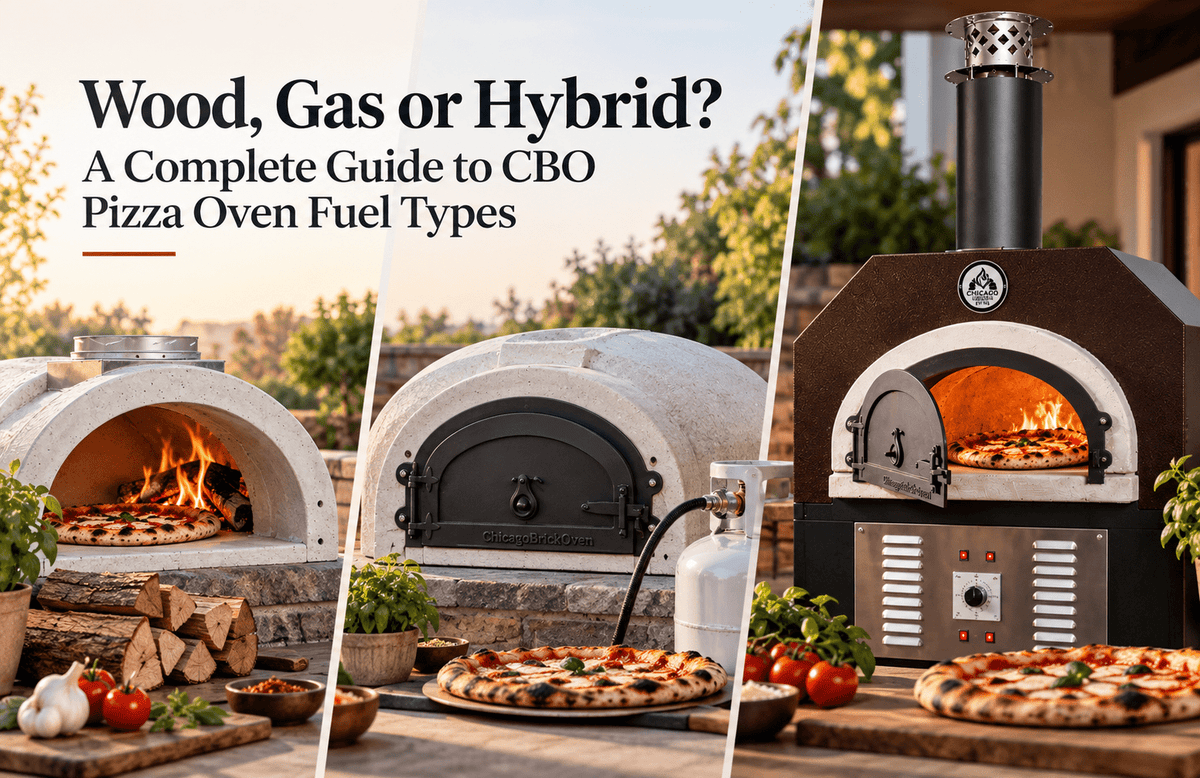
Choosing the right fuel configuration is one of the most important decisions when selecting a pizza oven. The choice affects how you start and manage the oven, the cooking experience, installation requirements, and day-to-day convenience.
For Chicago Brick Oven, the relevant fuel configurations covered in this guide are wood-fired ovens and hybrid dual-fuel ovens.
A hybrid oven combines a gas burner with a wood-burning chamber, allowing you to use gas when convenience is the priority and wood when you want the traditional wood-fired cooking experience.
CBO does not offer a separate standalone gas-only oven category.
The right choice ultimately depends on how you plan to cook, where the oven will be installed, and which CBO model is appropriate for your specific application.
Quick Answer
- Wood-fired ovens are a strong choice for people who enjoy traditional pizza making, live fire, and the hands-on process of managing a wood fire.
- Hybrid dual-fuel ovens combine a wood-burning chamber with a gas burner, giving you the flexibility to cook with wood or gas in the same oven.
For homeowners who want both the traditional wood-fired experience and the convenience of gas, a CBO hybrid model can provide greater flexibility.
For a dedicated wood-fired installation, CBO's DIY kit line provides another option, including models identified by CBO as certified for indoor and outdoor use when installed according to the applicable requirements.
However, fuel choice should not be used as a shortcut for determining whether an oven can be installed indoors. Indoor suitability is model-specific and depends on the oven's certification and installation requirements.
What Determines a Pizza Oven's Fuel Type?
A pizza oven's fuel configuration determines how it generates and maintains cooking heat.
Wood-Fired
A wood-fired oven burns wood directly in the cooking chamber. The fire produces heat, flame, and the characteristic cooking environment associated with traditional wood-fired pizza.
Hybrid Dual-Fuel
A hybrid oven combines a gas burner with a traditional wood-burning chamber. This allows the operator to choose between gas and wood depending on the cooking situation.
Fuel configuration can affect:
- Preheating and startup
- Fire management
- Cooking experience
- Fuel handling
- Maintenance
- Installation requirements
The important distinction for CBO buyers is that hybrid does not mean gas-only. A hybrid oven provides both fuel options within one oven.
Wood-Fired Ovens: Pros, Cons & Best For
-
Wood-fired ovens remain the traditional choice for pizza enthusiasts who enjoy cooking with a live fire.
-
Burning wood directly in the chamber creates the flame and cooking environment associated with CBO's FlameRoll design.
Advantages of Wood-Fired Ovens
- Traditional wood-fired cooking experience
- Live flame and visible fire
- Wood-fired flavor and cooking characteristics
- Hands-on fire management
- No gas burner required
Considerations
Wood-fired cooking requires more active fire management.
You'll need to:
- Build and maintain the fire
- Manage the wood supply
- Remove ash periodically
- Plan for appropriate venting
- Follow the installation requirements for the specific oven
For homeowners who enjoy the ritual of building and tending a fire, these requirements can be part of the appeal.
Hybrid Dual-Fuel Ovens: How They Work
A hybrid dual-fuel pizza oven combines a gas burner with a traditional wood-burning chamber.
This gives you two ways to operate the same oven.
You can use gas when you want a convenient startup and wood when you want the traditional wood-fired experience.
For example, a homeowner might use gas for a quick weeknight pizza session and choose wood when entertaining guests.
The key advantage is flexibility. You don't need to choose between owning a wood-fired oven and having a gas option; you can have both capabilities in a compatible hybrid model.
Benefits of Hybrid Dual-Fuel
- Wood-fired cooking option
- Gas cooking option
- Faster gas-assisted startup
- Greater flexibility for different cooking occasions
- One oven instead of separate wood and gas units
Things to Consider
Hybrid ovens include additional gas components, such as a gas line and ignitor system, that require appropriate inspection and maintenance according to the manufacturer's requirements.
Wood-Fired vs. Hybrid: Side-by-Side Comparison
|
Feature |
Wood-Fired |
Hybrid Dual-Fuel |
|
Fuel options |
Wood |
Wood + gas |
|
Cooking experience |
Traditional wood-fired |
Wood-fired or gas |
|
Fire management |
Required |
Optional when using gas |
|
Gas operation |
No |
Yes |
|
Flexibility |
Dedicated wood-fired experience |
Choose wood or gas |
|
Maintenance |
Ash removal and applicable chimney/flue maintenance |
Wood-fired maintenance plus gas/ignition components |
|
Best for |
Traditionalists and dedicated wood-fired cooking |
Homeowners or commercial operators wanting flexibility |
The hybrid category should not be confused with a separate CBO gas-only category. The hybrid configuration provides dual-fuel capability.
Which Fuel Configuration Fits Your Lifestyle?
Consider how you expect to use the oven.
Choose Wood-Fired If You:
- Primarily cook outdoors
- Enjoy building and managing a fire
- Want the traditional wood-fired experience
- Don't need gas operation
- View fire management as part of the cooking process
Choose Hybrid If You:
- Want both wood and gas options
- Want flexibility between traditional and convenient cooking
- Cook frequently during the week
- Entertain and want the option to use wood
- Want to choose the fuel based on the occasion
For Commercial Kitchens
For a commercial kitchen, the CBO 750 Hybrid Countertop (Commercial) is identified as a commercial hybrid dual-fuel model. Its indoor installation requires the commercial ventilation system specified by its certification and applicable requirements.
The choice should therefore consider not only fuel preference but also the intended installation environment, operating volume, and applicable codes.
Best CBO Ovens by Fuel Configuration
CBO's product lineup includes both dedicated wood-fired and hybrid options.
|
Configuration |
CBO Model |
Why Consider It |
|
Wood-Fired |
CBO 750 DIY Kit |
Full wood-fired build |
|
Wood-Fired |
CBO 500 DIY Kit |
Smaller wood-fired option |
|
Hybrid Residential |
CBO 750 Hybrid Countertop (Residential) |
Wood + gas flexibility for outdoor residential use |
|
Hybrid Residential |
CBO 750 Hybrid Stand (Residential) |
Dual-fuel flexibility in a freestanding format |
|
Hybrid Commercial |
CBO 750 Hybrid Countertop (Commercial) |
Dual-fuel option for commercial applications |
The existing CBO source material identifies these models and configurations.
Important Indoor Installation Distinction
The fuel configuration alone does not determine whether an oven can be installed indoors.
For example:
- CBO 750 Hybrid Countertop (Residential): certified for outdoor residential use only.
- CBO 750 Hybrid Countertop (Commercial): CBO's indoor-certified hybrid model, subject to its commercial certification and required ventilation.
- CBO DIY Kits: CBO identifies the 500/750/1000 DIY kits as certified for Indoor & Outdoor Use, with indoor installations requiring an appropriate exterior masonry chimney and code compliance.
Always verify the certification and installation requirements for the exact model before planning an indoor installation.
Step-by-Step: How to Choose Your Fuel Configuration
1. Decide How You Will Use the Oven
Think about your normal cooking schedule.
Are you:
- Cooking occasionally on weekends?
- Making pizza several times a week?
- Entertaining regularly?
- Running a commercial kitchen?
Your answer can help narrow the appropriate configuration.
2. Decide Whether You Want Gas Convenience
If you want the option to use gas for convenient startup while retaining the ability to cook with wood, a hybrid configuration may be appropriate.
If you specifically want the traditional wood-fired process, a dedicated wood-fired model may be the better fit.
3. Consider the Installation Location
Determine whether your oven will be:
- Outdoors
- In an outdoor kitchen
- In a residential indoor space
- In a commercial kitchen
Do not assume that a hybrid oven is automatically suitable for indoor installation.
Indoor suitability depends on the exact model's certification and installation requirements.
4. Consider Ventilation or Chimney Requirements
For a wood-fired installation, combustion byproducts require an appropriate exterior chimney or flue system.
For the CBO 750 Hybrid Countertop (Commercial), indoor installation requires the commercial-grade exhaust ventilation specified by its certification.
Your contractor should review the exact oven specifications before the kitchen design is finalized.
5. Consider Cooking Frequency
If you cook frequently and value a more convenient startup, a hybrid may be attractive.
If you cook occasionally and enjoy the process of building a fire, wood-fired may better match your preferences.
6. Choose the Specific CBO Model
Once you've established your fuel preference and installation requirements, select the CBO model that matches your application.
Pros and Cons Summary
|
Wood-Fired |
Hybrid Dual-Fuel |
|
|
Pros |
Traditional experience, live flame, wood-fired cooking |
Wood + gas flexibility, convenient gas operation |
|
Considerations |
Requires fire management and appropriate venting |
Additional gas and ignition components |
|
Best for |
Wood-fired enthusiasts and outdoor cooking |
Users wanting flexibility between wood and gas |
Neither configuration is universally better.
The right choice depends on how you intend to cook and where the oven will be installed.
Expert Tips From the CBO Team
Don't Choose Fuel Based on Installation Location Alone
An indoor space does not automatically mean that hybrid is the appropriate choice.
The specific oven model and its certification determine whether indoor installation is permitted and what ventilation or chimney system is required.
Think About Your Actual Cooking Habits
If you enjoy the process of building a fire every time you cook, a dedicated wood-fired oven may be exactly what you want.
If you want the flexibility to choose between wood and gas depending on the occasion, a hybrid oven gives you that option.
Plan the Installation Before Buying
Before selecting an oven, discuss the model's:
- Certification
- Footprint
- Clearances
- Ventilation
- Chimney/flue requirements
- Fuel requirements
with your contractor or CBO team.
Don't Assume a Hybrid Is Gas-Only
A hybrid oven is specifically designed to provide dual-fuel capability.
The CBO 750 Hybrid Countertop (Commercial), for example, is identified as a hybrid dual-fuel model not a standalone gas-only oven.
Key Takeaways
- CBO's relevant fuel configurations are wood-fired and hybrid dual-fuel; CBO does not present a separate standalone gas-only oven category.
- A wood-fired oven is designed around traditional wood-fired cooking and live-fire management.
- A hybrid dual-fuel oven combines a gas burner with a wood-burning chamber.
- Hybrid gives you the ability to choose between wood and gas depending on the cooking session.
- The CBO 750 Hybrid Countertop (Residential) is for outdoor residential use, not indoor installation.
- The CBO 750 Hybrid Countertop (Commercial) is CBO's indoor-certified hybrid model, subject to its commercial certification and required ventilation.
- CBO's DIY kit line is identified as Indoor & Outdoor Use certified, with appropriate exterior masonry chimney requirements for indoor installations.
- Fuel type should never be used as a substitute for checking model-specific indoor certification.
- If you want gas capability from the start, choose a compatible hybrid model rather than planning to convert a wood-fired oven later.
Conclusion
There isn't one universally correct pizza oven fuel configuration. The best choice depends on how you cook, how often you cook, where the oven will be installed, and how much flexibility you want.
A dedicated wood-fired CBO oven is a natural fit for people who enjoy traditional live-fire cooking and the hands-on process of managing a wood fire.
A CBO hybrid dual-fuel oven provides another option by combining wood-fired cooking with gas operation in one oven. That flexibility can be valuable for homeowners and commercial operators who want to choose between the two fuel modes based on the occasion.
For indoor installations, however, the decision cannot be made based on fuel type alone. The exact CBO model's certification and installation requirements must be confirmed first. The Residential Hybrid is outdoor-only, while the Commercial Hybrid has specific commercial indoor requirements, and CBO's DIY kits have their own certified installation requirements.
Choose the fuel configuration that matches your cooking style, then choose the CBO model that is certified and designed for your installation.
Ready to choose your CBO pizza oven? Explore CBO's wood-fired and hybrid oven options or speak with the CBO team about the model that fits your cooking and installation requirements.
Frequently Asked Questions
Is a wood-fired or gas pizza oven better?
Neither is universally better.
Wood-fired ovens provide the traditional fire-based cooking experience, while a hybrid dual-fuel oven gives you both wood and gas options.
What is a hybrid pizza oven?
A hybrid pizza oven combines a gas burner with a traditional wood-burning chamber in one oven.
This allows you to cook using gas or wood depending on your preference.
Does a hybrid oven still cook like a wood-fired oven?
When operated in wood mode, a hybrid oven uses its wood-burning chamber and cooking geometry. Gas mode provides a different operating experience focused on convenience and consistency.
Is a hybrid oven harder to maintain?
A hybrid oven includes additional gas and ignition components that require appropriate inspection and maintenance, in addition to normal wood-fired maintenance such as ash removal.
Which fuel configuration is best for a commercial kitchen?
A hybrid dual-fuel configuration can be useful in commercial kitchens where operators want gas convenience during service while retaining the ability to cook with wood.
The CBO 750 Hybrid Countertop (Commercial) is identified as a commercial hybrid model. Its indoor installation must follow its commercial certification and required ventilation system.
Can I convert a wood-fired oven to gas later?
Generally, no.
Fuel capability is built into the oven during manufacturing. If you think you may want gas capability later, selecting a hybrid model from the beginning is more practical.
Can I install a CBO hybrid oven indoors?
It depends on the specific model.
The CBO 750 Hybrid Countertop (Residential) is certified for outdoor residential use only. The CBO 750 Hybrid Countertop (Commercial) is the indoor-certified hybrid model and requires the commercial ventilation system specified by its certification.
Does hybrid automatically mean easier indoor installation?
No.
Indoor installation requirements are determined by the exact oven's certification and the installation environment. A hybrid residential model being designed for outdoor use does not make it suitable for an indoor kitchen.
Leave a comment