
How to Keep Your Pizza Oven Cooking Through a Cold Winter
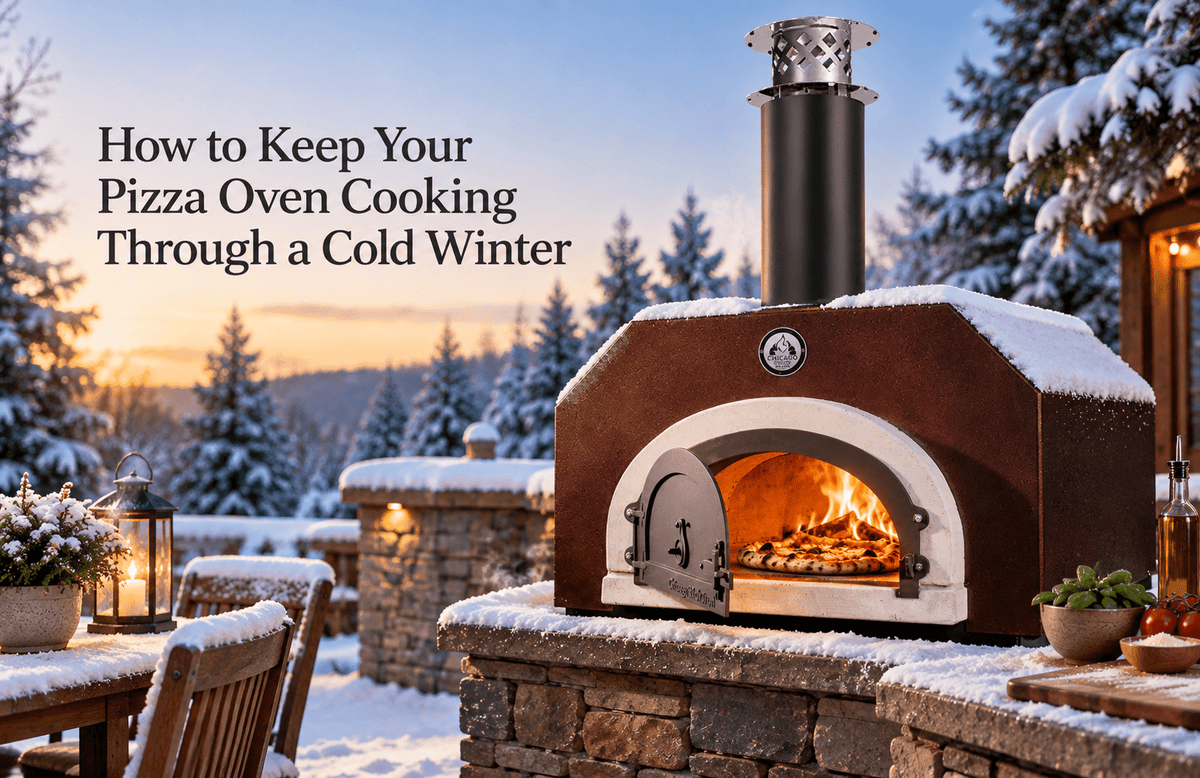
Can you use a pizza oven in winter? Absolutely. A properly installed and maintained Chicago Brick Oven can be used for outdoor cooking throughout the year, including during cold weather.
Winter does require a different approach to firing and preparation. The biggest consideration is the temperature difference between cold outdoor conditions and the intense heat generated inside a brick oven. Start the fire gradually, allow additional time for the oven to heat, protect the cooking area from strong wind, and keep your wood dry.
For CBO owners, winter cooking is not about avoiding the cold. It is about understanding how refractory materials respond to temperature changes and adjusting your firing routine accordingly.
Can You Use a Pizza Oven in Winter?
Yes. A pizza oven in winter can be an excellent way to continue outdoor cooking when temperatures drop.
In fact, the visible fire and intense heat of a Chicago Brick Oven can make winter cooking particularly enjoyable. The key is to allow the oven to transition from cold to high-temperature cooking gradually.
Chicago Brick Oven ovens are engineered specifically for demanding North American climates. CBO's proprietary refractory cement is reinforced with stainless steel fibers and designed to withstand repeated heating and cooling cycles, including the freeze-thaw conditions experienced across colder regions of the United States.
However, durable construction does not eliminate the need for proper operating practices.
1. Start Your Winter Fire Slowly
The most important rule when using a pizza oven in cold weather is to avoid shocking a cold oven with an extremely large fire.
Refractory materials expand as they heat and contract as they cool. A sudden transition from very cold conditions to intense heat can create unnecessary thermal stress.
Instead, start with a smaller fire and gradually increase the size.
Think of the first part of your winter firing process as warming the oven rather than immediately trying to reach cooking temperature.
A gradual firing approach:
- Start with a small amount of properly dried hardwood.
- Allow the initial fire to establish itself.
- Gradually add larger pieces of wood.
- Increase the fire as the oven warms.
- Continue until the dome and hearth are properly heated for cooking.
This approach is particularly important when outdoor temperatures are below freezing.
Chicago Brick Oven specifically recommends heating the oven more slowly when outdoor temperatures are below 32°F to help minimize thermal shock.
2. Keep Snow and Ice Away From the Oven
Before starting a fire, inspect the oven and surrounding cooking area.
Remove snow and ice from areas where they could interfere with safe operation. Make sure the chimney, flue, cooking area, handles, and surrounding surfaces are clear.
Most importantly, do not introduce snow or ice into the cooking chamber.
The refractory dome and hearth are designed to handle intense heat, but introducing moisture directly to hot refractory components can create unnecessary thermal stress.
If the oven has been exposed to significant moisture or has remained unused for an extended period, follow CBO's recommended curing or drying procedure before returning to normal high-temperature cooking.
3. Give Your Oven More Time to Preheat
Cold weather can make it take longer for your oven to reach its ideal cooking condition.
This is not simply because the outside air is cold. The refractory dome and hearth begin at a lower temperature and need to absorb substantial thermal energy before they are ready for high-temperature cooking.
Instead of focusing only on air temperature, pay attention to the hearth and dome.
An infrared thermometer can help you monitor the cooking surface and determine when it has reached the appropriate temperature for your pizza.
You may need to allow additional preheating time compared with summer cooking. Rather than relying on a fixed extra 15 or 30 minutes for every winter session, use the oven's temperature and cooking performance as your guide.
4. Keep Your Firewood Completely Dry
Dry hardwood is important throughout the year, but it becomes particularly important in winter.
Snow, rain, and humidity can introduce moisture into improperly stored firewood. Wet wood produces more smoke and generally burns less efficiently, making it harder to build and maintain the high temperatures required for pizza.
Store your cooking wood:
- Off the ground
- Protected from snow and rain
- In a dry, well-ventilated location
- Where it can remain properly seasoned
Chicago Brick Oven recommends using dry, aged hardwood for wood-fired cooking.
Avoid using wet or freshly cut wood simply because it is available. Good fuel makes it easier to establish a strong, clean-burning fire.
5. Protect the Oven From Strong Winter Winds
Cold temperatures are not the only winter challenge. Wind can significantly affect your outdoor cooking experience.
Strong gusts can interfere with fire management, increase heat loss, and make working around the oven uncomfortable.
If possible, position your outdoor kitchen or outdoor pizza oven in a location naturally protected from prevailing winds.
A properly designed outdoor kitchen can also incorporate wind protection while maintaining the clearances and ventilation required for safe operation.
Do not enclose the oven in an improvised structure simply to block the wind. Maintain the clearances, ventilation, and installation requirements specified for your CBO model.
6. Use the Oven Door Correctly
An oven door can help retain heat when used as intended, but it should never be used to restrict airflow during an active fire unless the specific CBO accessory and operating instructions permit it.
Chicago Brick Oven offers insulating doors designed for appropriate cooking applications, including baking and retaining heat after the fire has been managed according to the cooking method.
Always use the correct door for your oven and follow CBO's instructions.
Also remember the distinction between an insulating oven door and a decorative door. CBO's decorative black door is not intended to be closed while a fire is burning or when the oven temperature exceeds 400°F.
7. Adjust Your Cooking Expectations
Winter cooking may require more active fire management.
Cold outdoor conditions can affect how quickly the oven heats and how rapidly heat is lost when the cooking chamber is opened.
Once the oven reaches the desired cooking temperature, avoid leaving the door open unnecessarily.
Have your dough, toppings, tools, and cookware ready before launching your first pizza.
This allows you to spend more time cooking and less time allowing valuable heat to escape.
8. Don't Let the Cold Change Your Wood-Fired Technique
The fundamentals of cooking pizza remain the same.
Your CBO oven uses the interaction of radiant heat, convection, and conduction to cook food. The heated refractory hearth transfers heat into the dough, while the hot dome and live flame provide intense radiant heat.
CBO's FlameRoll™ technology works with the low-dome design to circulate concentrated heat through the cooking chamber. The flame rolls across the dome and down the sides, helping create the high-temperature cooking environment CBO ovens are engineered to deliver.
Winter does not change that technology. It simply means you need to give the oven more time to reach the right thermal condition.
9. Winterize Your Pizza Oven When It Is Not Being Used
If you live in a region with prolonged freezing temperatures, winterizing your pizza oven is primarily about protecting the oven from moisture and ensuring it remains ready for safe operation.
Before periods of extended non-use:
- Clean out ash and food debris.
- Make sure the cooking chamber is dry.
- Inspect the chimney and flue.
- Check the exterior for moisture intrusion.
- Use an appropriate protective cover.
- Store firewood in a dry location.
- Inspect the oven after severe weather.
A cover helps protect an outdoor oven from unnecessary exposure, but it should be used according to the manufacturer's recommendations.
Never cover or seal an oven while it is hot. Allow the oven to cool completely first.
Built for North American Winters
Chicago Brick Oven was founded in 2006 after its founders encountered the limitations of imported wood-fired ovens, including long shipping times, high import costs, shipping damage concerns, and limited local support.
That experience influenced the way CBO ovens are engineered.
CBO uses a proprietary refractory cement formula reinforced with stainless steel fibers and designs its ovens for the demanding conditions found throughout North America—from cold Midwestern winters to freeze-thaw cycles in northern climates.
The low-dome design, refractory construction, insulation, and FlameRoll™ technology work together to create a high-performance cooking system capable of reaching temperatures of up to 1,000°F under appropriate operating conditions.
That means your outdoor pizza oven does not have to become a seasonal appliance.
Winter Pizza Oven Checklist
Before your next cold-weather cook, check:
- Is the oven completely clear of snow and ice?
- Is the cooking chamber dry?
- Is the chimney and flue unobstructed?
- Is your hardwood properly dried and seasoned?
- Have you started the fire gradually?
- Have you allowed sufficient time for the hearth and dome to heat?
- Is the oven protected from excessive wind?
- Are your dough, toppings, and tools ready before cooking?
- Are you using the correct CBO door or accessory for the cooking method?
- Is the oven completely cool before covering it?
Frequently Asked Questions
Can you use a pizza oven in winter?
Yes. Chicago Brick Oven ovens are designed for outdoor cooking in demanding North American climates. When cooking in cold weather, gradually build the fire, allow the oven to heat properly, use dry hardwood, and follow the operating instructions for your specific CBO model.
How do you use a pizza oven in cold weather?
Start with a smaller fire and gradually increase the fire as the refractory oven warms. Allow additional time for the hearth and dome to reach cooking temperature, keep the wood dry, and protect the cooking area from strong winds while maintaining required ventilation and clearances.
Does cold weather damage a pizza oven?
Cold weather itself does not necessarily damage a properly designed and maintained pizza oven. The greater concern is thermal shock caused by heating a very cold refractory oven too quickly. Chicago Brick Oven recommends slower heating when outdoor temperatures are below 32°F.
How should I winterize my pizza oven?
Clean the cooking chamber, remove ash and debris, make sure the oven is dry, inspect the chimney and exterior, and use an appropriate protective cover when the oven is completely cool. Store firewood in a dry location and inspect the oven after severe winter weather.
Does a pizza oven take longer to heat in winter?
It can. Cold outdoor temperatures mean the refractory dome and hearth start at a lower temperature and may require additional firing time to reach the desired cooking condition. Use the oven's actual hearth and dome temperature rather than relying only on a fixed preheating time.
Final Takeaway
Winter is not a reason to put your Chicago Brick Oven away.
With the right approach, your pizza oven in winter can continue to be the centerpiece of your outdoor kitchen. Start slowly, use dry hardwood, allow the refractory materials to warm gradually, protect the oven from harsh wind and moisture, and give the hearth enough time to become fully heat-saturated.
When the snow is outside and the fire is rolling across the dome, there is something especially satisfying about making a hot, wood-fired pizza in the middle of winter.
Cold weather outside. Real fire inside. Keep cooking
Leave a comment