




 Call Us


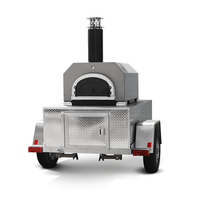




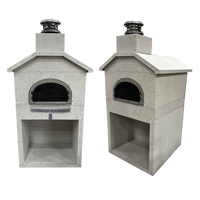



A wood fired pizza oven outdoor uses a dome-shaped chamber built from refractory materials to reach extremely high temperatures often approaching 1,000°F. Heat is generated from a live wood fire and stored in the oven’s thermal mass. Cooking happens through three mechanisms: radiant heat from the dome, convection from circulating hot air, and conduction from the heated hearth floor. Once fully heated, pizzas cook in approximately 90–120 seconds, producing a crisp base, airy interior crumb, and signature flame-kissed char that cannot be replicated in a conventional oven.
At Chicago Brick Oven (CBO), this process is enhanced through proprietary FlameRoll™ technology, low-dome engineering, and American-made refractory materials designed for extreme climates delivering consistent, professional performance for both residential and commercial environments.
Step 1: Building the Fire & Charging the Thermal Mass
A residential wood fired oven begins with building a wood fire directly inside the cooking chamber. Unlike a metal appliance, a true brick oven is constructed from high-density refractory materials that act as a thermal battery.
At CBO, ovens are engineered with a proprietary refractory cement formula reinforced with stainless steel fibers. This structure:
- Absorbs intense heat
- Stores it evenly
- Releases it gradually over time
As the fire burns, soot temporarily darkens the dome. When the dome transitions from black to white, it indicates the oven has reached optimal cooking temperatures typically 700–1,000°F.
This is not cosmetic. It’s physics. The carbon has burned off because the dome is fully saturated with heat.
Step 2: Understanding the Three Types of Heat
What separates residential wood fired pizza ovens from standard kitchen ovens is the way heat moves.
1. Conduction (From the Hearth)
The oven floor, also called the hearth absorbs direct heat from the fire. When pizza dough touches the hot surface:
- Immediate moisture evaporation occurs
- The base crisps rapidly
- A structured, airy crust develops
This direct heat transfer is what creates the signature Neapolitan-style bottom.
2. Radiant Heat (From the Dome)
The dome acts as a radiant heat reflector. Once fully heated, it emits intense infrared heat downward onto the pizza.
This:
- Melts cheese evenly
- Blisters toppings
- Creates balanced browning
CBO low-dome, igloo-shaped design rooted in ancient Neapolitan oven science maximizes this downward heat reflection for faster and more even cooking.
3. Convection (Airflow Circulation)
Hot air doesn’t sit still.
The curved dome forces hot air to travel upward from the flame, roll across the ceiling, and circulate back downward. This airflow pattern ensures:
- Even cooking front to back
- No cold pockets
- Balanced internal temperature
At Chicago Brick Oven, this process is enhanced by proprietary FlameRoll™ technology, which creates a vacuum effect inside the chamber. This intensifies airflow and concentrates heat across the dome for consistent high-performance cooking.
Step 3: Managing the Fire
Once the oven reaches temperature, the fire is typically moved to the side or rear of the chamber. This allows:
- Direct flame exposure for radiant heat
- Open hearth space for cooking
- Continuous heat recharge
The oven “breathes” naturally. Cooler air enters from the lower front opening, feeds the flame, and hot air exits through the chimney or flue system. This controlled airflow maintains efficiency and temperature stability.
In both a wood fired pizza oven for home use and a commercial wood fired pizza oven, airflow engineering determines performance consistency.
Step 4: The 90-Second Cooking Window
With dome temperatures approaching 900°F+, authentic Neapolitan pizza cooks in approximately 90 seconds.
Here’s what happens during that short window:
- The crust rises rapidly
- Moisture flashes into steam
- Air pockets form in the crumb
- The outer edge chars lightly
- Cheese and toppings cook evenly
This high-heat environment creates a flavor profile that simply cannot be achieved in conventional residential ovens limited to ~500°F.
That is why everything tastes better woodfired.
Key Components of a True Wood Fired Oven
Whether evaluating a residential wood fired oven or a commercial wood burning pizza oven, the core components matter:
-
Dome – Reflects and radiates heat downward
-
Hearth – Conducts direct heat into the dough
-
Chimney/Flue – Controls airflow and exhaust
- Insulation – Retains heat and protects exterior surfaces
At Chicago Brick Oven, these components are engineered for durability in extreme North American climates handling freeze-thaw cycles, humidity, and seasonal shifts.
Why Engineering Matters (Residential vs Commercial)
Not all ovens are built the same.
A commercial wood fired pizza oven must meet strict safety and performance standards. CBO ovens are UL and NSF4 certified critical for restaurants and hospitality environments.
Residential buyers benefit from the same engineering principles:
- Faster heat-up times
- Superior heat retention
- Consistent multi-dish cooking
- Visible in-chamber flame aesthetics
These ovens are not single-use appliances. They can:
- Bake artisan bread directly on the hearth
- Roast meats
- Grill seafood
- Slow-cook ribs
- Use cast iron cookware
- Bake desserts
One fire. Multiple cooking zones. Simultaneous radiant, convection, and conduction heat.
The Science Behind the Dome Shape
The low-dome structure is not decorative. It is performance-driven.
The shape:
- Shortens flame travel distance
- Intensifies heat reflection
- Maximizes airflow efficiency
- Reduces temperature variance
This ancient Italian geometry, combined with modern American engineering, is what allows a wood fired pizza oven outdoors to function as a professional cooking system.
Final Takeaway
A wood fired pizza oven works by combining thermal mass, live flame, dome geometry, and three types of heat transfer to create a high-temperature cooking environment unmatched by conventional appliances.
At Chicago Brick Oven, this process is refined through:
- Proprietary FlameRoll™ technology
- Low-dome Neapolitan engineering
- Stainless steel reinforced refractory cement
- UL & NSF4 certification
- American manufacturing built for extreme climates
The result is more than a pizza oven.
It is a performance-driven artisan cooking system designed for backyard entertainers, culinary purists, and professional kitchens alike.
Because when heat, flame, and craftsmanship align
Everything tastes better woodfired.