




 Call Us









When designing a modern kitchen, especially one built for performance and aesthetics, choosing between gas cooktops, gas ranges, and gas rangetops can feel confusing. While these appliances may look similar at first glance, their functionality, installation, and cooking experience differ significantly.
If you’re exploring professional gas ranges or planning to upgrade your cooking setup, understanding the difference between a rangetop and a range is essential for making the right investment.
What Is a Rangetop?
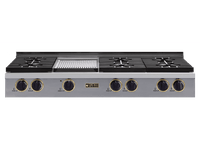
A gas rangetop is a professional-style cooking surface that is installed directly into your countertop but does not include an oven. It is designed to deliver high-performance cooking, similar to what you’d find in commercial kitchens.
Unlike standard gas cooktops, rangetops feature:
- Front-mounted control knobs for better accessibility
- Larger and more powerful burners
- Heavy-duty construction for long-term durability
You’ll often find variations like:
- Gas rangetop with sealed burners (easy cleaning, controlled flame)
- Gas rangetop with open burners (higher heat output, preferred by chefs)
- LP gas rangetop with sealed burners (ideal for propane setups)
- LP gas rangetop with open burners
From a design standpoint, rangetops are typically paired with wall ovens, allowing greater flexibility in kitchen layout.
What Is a Range?
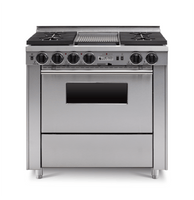
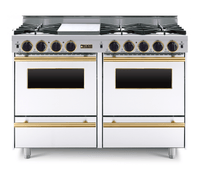
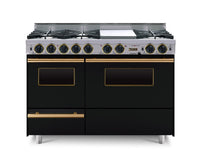
A gas range is an all-in-one appliance that combines a cooktop and an oven in a single unit. It’s the most common choice in residential kitchens due to its convenience and space efficiency.
Key types include:
- Sealed burner gas range (easy to clean, great for everyday cooking)
- Convection ranges (even heat distribution for baking and roasting)
- True convection ranges (fan + heating element for precise cooking results)
If you're planning to shop gas ranges, you’ll notice they’re available in multiple sizes and configurations, making them ideal for both compact and mid-sized kitchens.
Rangetop vs Range: Key Differences
Understanding the core differences helps you choose based on your cooking habits, kitchen layout, and long-term goals.
1. Structure & Design
- Gas ranges: Freestanding units with oven + cooktop combined
- Gas rangetops: Built into countertops, no oven included
Rangetops offer a modular kitchen approach, while ranges provide an all-in-one solution.
2. Performance & Power
- Professional gas ranges and rangetops both offer strong performance
- Rangetops typically deliver higher BTUs, making them ideal for high-heat cooking like searing or wok cooking
If performance is your priority, rangetops often outperform standard gas ranges.
3. Control & Usability
- Rangetops feature front-facing knobs, reducing the need to reach over hot cookware
- Ranges usually have top-mounted controls
Rangetops are ergonomically superior, especially in busy kitchens.
4. Installation & Flexibility
- Gas ranges: Plug-and-play installation
- Gas rangetops: Require custom cabinetry and are paired with separate ovens
Rangetops are perfect for custom kitchen designs, while ranges are better for quick upgrades.
5. Space & Storage
- Ranges occupy a single footprint
- Rangetops allow cabinet storage below and separate oven placement
This makes rangetops ideal for large kitchens or luxury layouts.
Rangetop vs Cooktop: A Quick Clarification
Many buyers confuse rangetops with gas cooktops, but they are not the same.
- Gas cooktops: Compact, top-mounted controls, lower power
- Gas rangetops: Larger, front controls, commercial-grade output
Think of rangetops as a step above cooktops, designed for serious cooking.
Which One Should You Choose?
Choose a Rangetop if:
- You want a professional kitchen experience at home
- You cook frequently and need high-heat performance
- You’re designing a custom or luxury kitchen
- You prefer pairing with wall ovens for flexibility
Choose a Range if:
- You need a space-saving solution
- You prefer a budget-friendly option
- You want a simple, all-in-one appliance
- You’re comparing options to shop for gas ranges quickly
Chicago Brick Oven Perspective: Why This Choice Matters
From a customer buying optimization (CBO) standpoint, this decision isn’t just about features, it’s about lifestyle alignment and long-term value.
- Gas ranges are perfect for mass-market usability easy to install, affordable, and versatile
- Gas rangetops cater to high-intent buyers looking for performance, design flexibility, and premium kitchen aesthetics
For brands and retailers, targeting keywords like professional gas ranges, true convection ranges, and gas rangetop with sealed burners allows you to capture both entry-level and high-end audiences effectively.
Final Thoughts
Both gas ranges and gas rangetops serve different purposes, and the right choice depends on your kitchen goals.
- If you want convenience and simplicity, go with a range
- If you want power, flexibility, and a premium cooking experience, a rangetop is the better investment
As kitchens evolve into more personalized and performance-driven spaces, rangetops are becoming the preferred choice for homeowners who see cooking as more than just a daily task it’s a craft.