
Things to Consider Before Buying a Pizza Oven
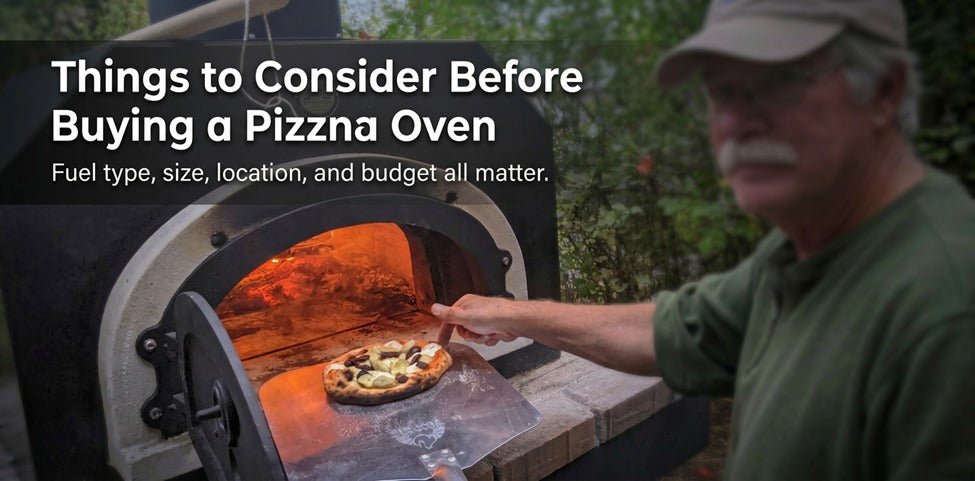
The best pizza oven for your home is the one that fits how you cook, the space you have and the installation you can support. Before comparing pizza ovens for sale, work through this checklist for fuel, capacity, construction, maintenance and total project cost.
1. Choose wood-fired or Hybrid cooking
A wood-fired oven suits cooks who enjoy building and tending a fire. A CBO Hybrid adds gas capability while retaining wood-fired cooking, so you can choose wood, gas or both in accordance with the model's operating instructions. CBO's oven choices are wood-fired and Hybrid dual-fuel—not a separate gas-only oven range.
Think about weeknight meals as well as entertaining. Do you want fire management to be part of every cooking session, or would you value a gas option? Our wood-fired versus Hybrid fuel guide explains the practical differences.
2. Match cooking capacity to your menu
Consider your usual group size, preferred pizza diameter and whether you will cook bread, vegetables or roasting dishes too. Compare the actual hearth dimensions and oven opening, not just an exterior measurement or model name. Leave room for the fire, turning a pizza and moving cookware safely.
- How many pizzas do you want to handle at once?
- Will your preferred pan fit through the opening?
- Do you have enough preparation and serving space beside the oven?
A larger oven is not automatically the better purchase. Choose usable capacity that fits your cooking habits and available space.
3. Decide between a built-in kit and an assembled oven
A DIY pizza oven kit lets you plan a custom enclosure around the oven. An assembled countertop model offers a finished oven exterior without building that enclosure, but still needs appropriate placement, support, installation and curing. The CBO-750 Mobile uses a wheeled stand; it is not the same as a road-going Tailgater trailer package.
Measure the delivery route, access openings, support area and working space before ordering. Confirm weight, clearances and chimney or ventilation requirements in the exact model's manual. Do not assume a compact footprint or gas fuel makes an oven suitable for indoor use.
4. Look beyond maximum temperature
Useful performance is about heating the cooking surface, holding heat and recovering between batches—not simply reaching the highest advertised temperature. Your pizza style, dough, toppings and cookware determine how you cook. Avoid treating a short bake time or preheat claim as a guarantee for every oven and recipe.
For the cooking side of that decision, read our wood-fired pizza oven temperature guide.
5. Understand materials, insulation and oven design
CBO ovens use cast refractory components. When comparing ovens, ask about the cooking floor, dome construction, insulation and the complete installation—not just the outer finish. Thermal mass and insulation have different roles: the refractory stores cooking heat, while insulation helps limit heat loss.
The low-dome design, opening and cooking surface also influence how you manage the fire and food. Inspect access for your peel and cookware. Insulation does not make an operating oven safe to touch, and refractory construction does not eliminate the need for curing and care.
6. Plan installation before choosing finishes
Bring the model's dimensions and installation manual to your installer before finalizing an outdoor kitchen. Review structural support, clearances, flue or ventilation arrangements and any applicable gas requirements. Indoor suitability depends on the exact model and certification, not on fuel preference alone.
Find the current CBO manuals and resources and use the instructions for your selected model. A finished exterior does not mean the oven can be used immediately without the required setup and curing.
7. Include cleaning and weather protection in your decision
Wood-fired use means managing fuel storage and removing cooled ash as instructed. A Hybrid also has gas and ignition components with their own inspection and maintenance requirements. Check access for cleaning and service, and choose the appropriate cover or weather protection for the installation.
Read the care instructions before buying. Do not assume all oven surfaces, doors or burner components can be cleaned in the same way.
8. Compare the complete project budget
Look beyond the oven price. Account for the enclosure or support, installation, chimney or ventilation, utilities, delivery access, protective cover and any accessories not included in your selected package. Check the current product listing for pricing and included items rather than relying on a generic accessory allowance.
A pizza peel, suitable brush and infrared thermometer are useful items to check on the package list. Avoid buying duplicates of tools already supplied.
9. Check reviews, warranty and support
Look for owner feedback about the model and installation you are considering. Repeated observations about cooking, setup or service are more useful than a star rating alone. Review the applicable written warranty, exclusions and maintenance responsibilities rather than assuming a standard term across brands or product lines.
Ask how to obtain replacement parts and model-specific guidance. If you are deciding between options, the CBO team can help check dimensions, fuel configuration and project requirements before you order.
Your final buying checklist
- Fuel configuration matches the way you want to cook.
- Hearth size, opening and work area suit your menu.
- Delivery access, support and installation have been planned.
- The exact model is appropriate for the intended location and use.
- Total cost includes installation and required accessories.
- Warranty, care and service information are understood.
Ready to compare models? Browse CBO residential pizza ovens and keep your project checklist beside you.
Leave a comment