
Aluminium vs Stainless Steel Pizza Peel: Which Should You Buy?
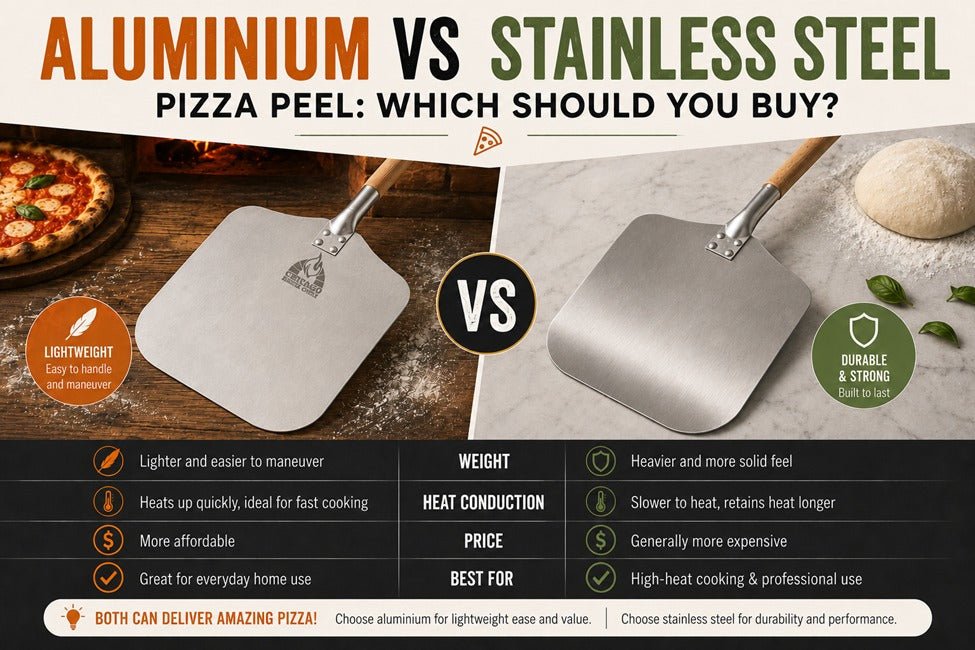
Choosing the right pizza peel can significantly improve your wood fired cooking experience. Whether you're making authentic Neapolitan pizza at 900°F or hosting backyard pizza nights, the material of your peel affects maneuverability, durability, heat handling, and overall cooking performance.
Two of the most popular options are aluminum and stainless steel pizza peels. Both are widely used in residential and commercial wood fired ovens, but each offers different advantages depending on your cooking style and oven setup.
If you are comparing the best material pizza peel for your outdoor kitchen, this guide breaks down the real-world differences between aluminum and stainless steel so you can choose the right tool for your cooking needs.
Why the Right Metal Pizza Peel Matters
A pizza peel is more than just a serving tool. In high-performance wood fired ovens, it becomes part of the cooking process itself.
Professional-grade ovens like those from Chicago Brick Oven can reach temperatures up to 1,000°F using proprietary FlameRoll™ technology. At these temperatures, pizzas cook in as little as 90 seconds, meaning cooks need precision, speed, and control.
The right metal pizza peel helps:
- Launch pizzas smoothly
- Rotate pizzas near live flame
- Retrieve pizzas safely
- Improve cooking consistency
- Handle high-temperature environments efficiently
Choosing the wrong material can make pizza handling harder, especially during fast-paced cooking sessions.
Aluminum Pizza Peel: Lightweight & Fast Handling
Aluminum pizza peels are extremely popular among residential pizza makers and outdoor entertainers.
Advantages of Aluminum Pizza Peels
Lightweight Design
One of the biggest benefits of aluminum is its lighter weight. This makes it easier to:
- Launch pizzas quickly
- Rotate pizzas smoothly
- Handle multiple pizzas during gatherings
- Reduce wrist fatigue during long cooking sessions
For home chefs cooking several pizzas back-to-back, lightweight maneuverability becomes a major advantage.
Faster Movement Inside the Oven
Because aluminum peels are easier to control, they work exceptionally well in low-dome wood fired ovens where fast movements are important.
In ovens engineered for authentic Neapolitan cooking, like Chicago Brick Oven’s low-dome systems, pizzas cook rapidly under rolling flame heat. Lightweight peels help users react quickly during rotation and retrieval.
Excellent for Residential Use
Most homeowners prefer aluminum peels because they are:
- Easier to handle
- More beginner-friendly
- Comfortable for frequent use
- Available in multiple sizes
Potential Drawbacks
Although aluminum performs extremely well, it may:
- Bend slightly under heavy commercial use
- Scratch over time
- Show wear faster in high-volume kitchens
For occasional residential cooking, these issues are usually minimal.
Stainless Steel Pizza Peel: Built for Durability
Stainless steel pizza peels are commonly used in commercial kitchens and professional cooking environments where durability matters most.
Advantages of Stainless Steel Pizza Peels
Exceptional Strength
Stainless steel is highly durable and resistant to warping, making it ideal for:
- Commercial restaurants
- High-volume pizza production
- Heavy-duty wood fired cooking
- Long-term professional use
For restaurants operating continuously at high temperatures, durability becomes essential.
Better Heat Resistance
Stainless steel handles prolonged exposure to heat extremely well, which is valuable in commercial ovens running all day.
This makes stainless steel peels a preferred option in professional kitchens using UL and NSF4-certified ovens.
Long-Term Investment
Because stainless steel is extremely durable, many chefs see it as a long-term investment for demanding cooking environments.
Potential Drawbacks
The main downside of stainless steel is weight.
Compared to aluminum, stainless steel peels can:
- Feel heavier during repeated use
- Require more wrist control
- Become tiring during extended pizza sessions
For beginners or casual backyard cooks, this may reduce maneuverability slightly.
Pizza Peel Comparison: Aluminum vs Stainless Steel
When comparing aluminum and stainless steel, the best choice depends on how often you cook and the type of oven environment you use.
|
Feature |
Aluminum Pizza Peel |
Stainless Steel Pizza Peel |
|
Weight |
Lightweight |
Heavier |
|
Maneuverability |
Excellent |
Moderate |
|
Durability |
Very Good |
Exceptional |
|
Best For |
Residential cooking |
Commercial kitchens |
|
Heat Resistance |
High |
Very High |
|
Ease of Use |
Beginner-friendly |
Professional-grade |
|
Long-Term Wear |
Moderate |
Excellent |
This pizza peel comparison shows why many serious cooks eventually own both types depending on different cooking situations.
Which Is the Best Material Pizza Peel for Wood Fired Ovens?
The best material pizza peel depends on your cooking style.
Choose Aluminum If:
- You cook mainly at home
- You want lightweight handling
- You make pizzas for family gatherings
- You prefer easier maneuverability
- You frequently rotate pizzas manually
Choose Stainless Steel If:
- You operate a commercial kitchen
- You cook at high volume
- You prioritize durability
- You need heavy-duty performance
- You want long-term resistance to wear
For many wood fired enthusiasts, aluminum works best as a launching peel, while stainless steel performs well for turning and commercial workflows.
How This Connects to the Best Pizza Peels for Wood Fired Ovens
Material is only one part of selecting the right pizza peel. Handle length, peel shape, oven size, and cooking style also affect performance.
In our pillar guide on Best Pizza Peels for Wood Fired Ovens, we cover:
- Wooden vs metal pizza peel comparison
- Pizza turning peel vs launching peel
- Pizza peel size guide
- Long handle pizza peels
- How to prevent sticking in wood fired ovens
If you're building a complete outdoor cooking setup, understanding the full range of pizza peel options helps improve safety, cooking speed, and overall pizza quality.
Why Professional-Grade Tools Matter
Premium wood fired ovens are designed for authentic artisan cooking, and the accessories should match that performance level.
Chicago Brick Oven combines:
- Ancient Neapolitan oven principles
- American engineering
- Proprietary refractory materials
- FlameRoll™ heat circulation technology
Because these ovens achieve extreme cooking temperatures, professional-grade pizza tools become essential for maintaining precision and consistency.
Whether you choose aluminum or stainless steel, investing in the right metal pizza peel improves:
- Pizza launching
- Rotation control
- Heat management
- Cooking efficiency
- Overall wood fired cooking experience
Final Thoughts
There is no single “perfect” pizza peel material for every cook.
Aluminum pizza peels are lightweight, agile, and ideal for residential outdoor cooking. Stainless steel pizza peels offer superior durability and are built for commercial-level performance.
For most homeowners using wood fired ovens, aluminum provides the best balance of maneuverability and ease of use. For professional kitchens or high-volume cooking environments, stainless steel often becomes the better long-term choice.
The most important factor is choosing a pizza peel that complements your oven, cooking frequency, and overall workflow.
When paired with a professionally engineered wood fired oven like those from Chicago Brick Oven, the right pizza peel helps unlock authentic artisan cooking with greater control, efficiency, and performance.
Leave a comment